

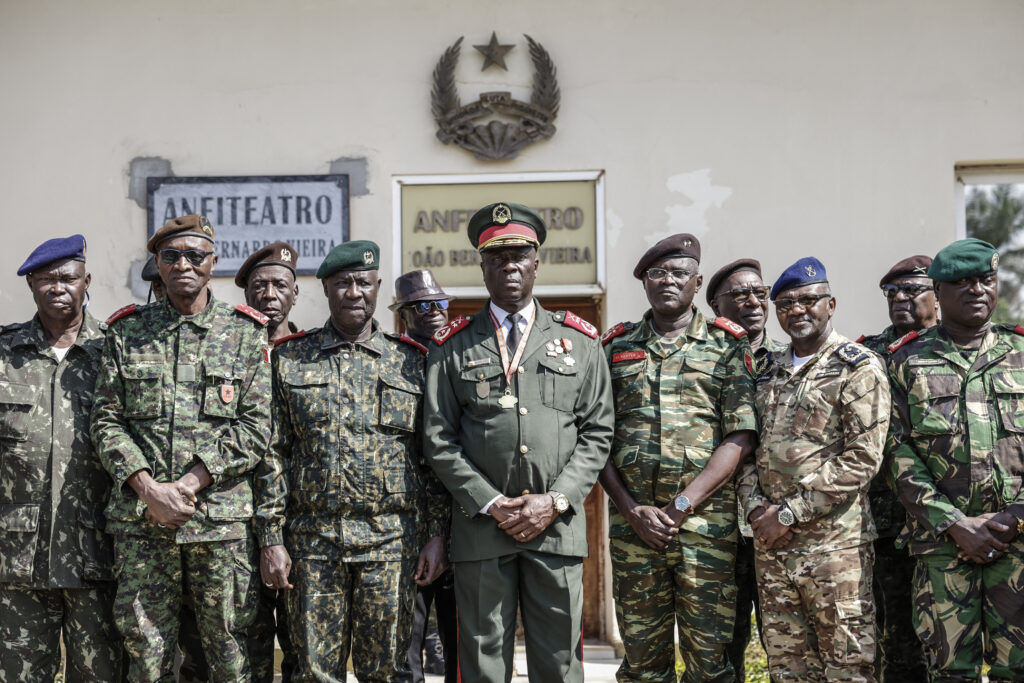
In an effort to guarantee the “complete restoration of constitutional order” in Guinea-Bissau after a recent coup, a delegation from the Economic Community of West African States (ECOWAS) travelled there on Monday to interact with military authorities. The mission is led by ECOWAS Chairman and Sierra Leonean President Julius Maada Bio.
The delegation’s arrival comes as Guinea-Bissau’s military administration, which seized control last Wednesday, put a ban on protests, strikes, and any activity considered a risk to national peace and stability. In an effort to preserve administrative continuity, authorities also issued orders for ministries and public institutions to reopen.
The coup occurred barely three days after a controversial presidential election, in which both major candidates claimed victory. Following the takeover, President Umaro Sissoco Embalo declared to French media that he had been deposed and arrested, though he has since escaped to Brazzaville, the capital of the Republic of Congo.
The military nominated former army chief of staff General Horta Inta-a as chairman of the transitional administration, which is supposed to govern for one year. Inta-a has announced a new 28-member cabinet, mostly formed of loyalists of the ousted president, raising worries over the impartiality of the interim administration.
In a similar move, Nigeria has given protection for opposition candidate Fernando Dias da Costa, alleging “an imminent threat to his life.” ECOWAS has been asked to send security personnel to the Nigerian embassy in Bissau, where Dias da Costa is currently.
ECOWAS promptly suspended Guinea-Bissau from its decision-making bodies pending the restoration of constitutional order. The bloc’s mediation team is tasked with talking with coup leaders to reinstall democratic administration.
The United Nations also criticised the coup. Secretary-General António Guterres called for the quick and unconditional reinstatement of constitutional powers, including the release of opposition representatives, arrested officials, and election authorities, calling the events a “grave violation of democratic principles.
The developing crisis highlights Guinea-Bissau’s democratic institutions’ vulnerability and the pressing need for regional and global initiatives to preserve electoral integrity and restore security.
