

A wave of renewed optimism has been sweeping across Africa. With a population on track to exceed 2.5 billion by 2050, vast natural resources, and record levels of infrastructure investment, many analysts say the continent is entering a historic moment. The African Development Bank (AfDB) believes Africa’s combined GDP could reach $4tn by 2030, driven by green energy, rapid urbanisation and digital innovation. As one senior AfDB economist put it earlier this year: “The future will be written in Africa.”
But alongside these promising trends is a troubling reality: democratic backsliding and worsening governance. The Mo Ibrahim Foundation’s 2024 African Governance Report warns that the continent’s progress is at risk. For the first time in a decade, its governance index has declined. Nearly 30 African countries have suffered coups, insurgencies or clear signs of democratic decay since 2020.
These shifts threaten not only political stability but also the economic gains so many African nations have fought to secure. As Mo Ibrahim cautioned, “Good governance is the foundation upon which Africa’s progress must rest.”
Tanzania: From Stability to Democratic Crisis
Tanzania’s sudden slide into repression has become one of the continent’s most alarming examples of democratic decay.
For decades, Tanzania was celebrated for its unity and calm politics. After independence in 1961 and its 1964 union with Zanzibar, the nation—under Julius Nyerere’s Ujamaa philosophy—stood as a symbol of African liberation. But beneath that unity was the dominance of a single party, Chama Cha Mapinduzi (CCM), which has ruled since 1977.
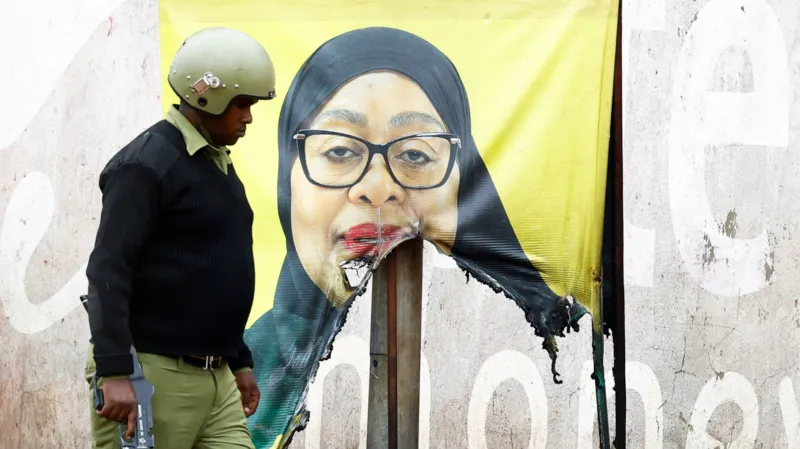
When President John Magufuli died in 2021, his vice-president, Samia Suluhu Hassan, became the first woman to lead Tanzania. Her early reforms sparked hope: banned media outlets reopened, opposition leaders were released, and she promised national reconciliation. But as she sought re-election this year, Tanzania veered sharply toward authoritarianism.
October’s presidential election became the breaking point. Opposition figures including Tundu Lissu were barred or arrested. Internet access was blocked, military forces were deployed, and independent observers were shut out. The National Electoral Commission declared Hassan the winner with 97.6%, a figure critics say belongs more to autocracies than democracies.
Protests erupted across Dar es Salaam, Arusha and Mwanza. Eyewitnesses described soldiers firing live ammunition at crowds and nighttime raids. Hospitals and morgues were overwhelmed. While the UN says “hundreds” may have died, African human rights coalitions estimate up to 3,000 deaths, citing evidence from hospitals and mass graves said to be dug outside major cities. The government denies all wrongdoing.
Several activists—including Mdude Nyagali, Edgar “Sativa” Mwakabela, Ali Mohammed Kibao and John Heche—have been killed or disappeared, further heightening human rights concerns.
A Regional Pattern of Democratic Backsliding
Tanzania’s repression reflects a broader trend across Africa. In Uganda, President Yoweri Museveni, now 81 and in power since 1986, plans to run again—extending his rule beyond four decades. In Sudan, war between the armed forces and the UAE-backed Rapid Support Forces has devastated Khartoum and displaced over 9 million people. In eastern Congo, fighting between government troops and M23 rebels continues, fueled by competition for minerals and regional influence.
These crises undermine the very foundations Africa needs to achieve the “century of growth” envisioned by economists.
A Call for Accountability and Action
If Africa’s rise is to continue, the international community must confront the erosion of governance and human rights. Humanitarian organisations are calling on the UN Human Rights Council to launch an independent investigation into the killings, detentions and disappearances in Tanzania’s 2025 election. They argue that the African Union and the Southern African Development Community must uphold the democratic commitments outlined in the African Charter.
Africa’s young population—the same force driving its economic promise—deserves the freedom to vote, speak and organise without fear. Prosperity without liberty, observers warn, will always be fragile.
The world cannot celebrate Africa’s economic potential while ignoring the bloodshed on its streets. Tanzania’s crisis is not an isolated event—it is part of Africa’s wider struggle to defend democracy. Until the voices of the silenced are heard, the continent’s future will remain uncertain.
