

The Federal Reserve is expected to hold interest rates steady on Wednesday, but the decision comes at one of the most complicated moments the central bank has faced in years — caught between rising inflation driven by the Iran war and growing signs of weakness in the job market.
Fed officials began the second day of their two-day policy meeting against a backdrop that shifted even as they were sitting down. Benchmark oil prices jumped from $104 to $108 a barrel following reports of an Israeli strike on an Iranian gas processing facility, adding fresh pressure to an economy already dealing with the fallout from a conflict that began less than three weeks ago. The average price of petrol at the pump hit $3.84 a gallon on Wednesday morning — up roughly 28% since the war began. Airlines are already warning passengers to expect higher fares as jet fuel costs surge, and the White House has confirmed it is looking for alternative sources of agricultural fertilisers.
The Iran war isn’t the only problem. Even before the conflict broke out, inflation was proving stubborn. US producer prices rose 3.4% year-on-year in February — the fastest pace in a year — a figure that can filter through into retail prices and signals further inflationary pressure ahead. The February jobs report, meanwhile, showed the economy shed 92,000 positions. The combination of rising prices and weakening employment is the classic recipe for stagflation, and it’s a word economists are increasingly willing to use.
KPMG chief economist Diane Swonk said the Fed’s updated projections — due at 2pm EDT on Wednesday alongside its rate decision — are likely to move in a stagflationary direction. She expects policymakers to mark down their growth forecasts while marking up their estimates for both inflation and unemployment. The so-called dot plot, which tracks where individual officials expect rates to go, is likely to reflect a split: some pushing for cuts to protect the job market, others holding firm or even hinting at rate hikes before the year is out.
Investors have already adjusted. Expectations for rate cuts have been pushed back sharply, with markets now pricing in no reductions until December at the earliest — even with Trump’s newly nominated Fed chief Kevin Warsh expected to take over from Jerome Powell by the June meeting. Trump, who has long pressured the Fed to cut rates, posted again on Truth Social on Wednesday referring to Powell by his preferred nickname “Too Late” and asking when rates would come down.
Fed Chair Powell is scheduled to hold a press conference at 2:30pm EDT. The policy statement will be closely scrutinised for any language suggesting that the next move in rates could be a hike rather than a cut — a significant shift that would signal just how seriously the Fed is taking the inflation threat.
This is the second major stagflationary shock the Iran war has delivered to the Fed’s calculations. The first came from Trump’s tariff agenda, which officials had already been wrestling with at their January meeting. The war has simply made a difficult situation harder to read, and with no clear end to the US-Israeli bombing campaign in sight, economists say the domestic fallout depends heavily on how long the conflict continues and where oil prices settle once the dust clears.
Skip to content Register Sign In Home News Sport Business Technology Health Culture Arts Travel Earth Audio Video Live Stock markets rattled and prices soar after strikes on Qatar gas hub 27 minutes ago Share Save Rachel Clun,Osmond ChiaandEmer Moreau,Business reporters
pasted
5:25 PM
3 / 3
Stock Markets Rattled and Prices Soar After Strikes on Qatar Gas Hub
Energy markets went into shock on Thursday after Iranian strikes hit Qatar’s main liquefied natural gas facility at Ras Laffan — one of the most important gas export sites on the planet — sending prices surging and stock markets tumbling around the world.
Brent crude hit $119 a barrel during the day before settling back to around $111 by Thursday afternoon. UK gas prices spiked 13% to 157p per therm, having briefly touched nearly 183p earlier in the session. European natural gas prices hit a three-year high. The price of gas on the continent is now more than double what it was before the US-Israeli war with Iran began.
The attack on Ras Laffan followed reports that Israel had struck Iran’s South Pars gas field — one of the world’s largest — the previous evening. Iran retaliated by hitting the Qatari LNG facility, causing what QatarEnergy described as “extensive damage.” The company’s chief executive Saad al-Kaabi told Reuters that the damage would sideline 12.8 million tonnes of LNG for three to five years. QatarEnergy, which had already declared force majeure in early March after earlier strikes, warned it may need to do so again on contracts for up to five years — a legal clause that frees it from liability when supply failures are caused by events beyond its control.
Qatar produces around a fifth of the world’s liquefied natural gas. Matthieu Favas, commodities editor at The Economist, told the BBC the scale of the disruption was enormous. The market had been holding out hope that the facility could be restarted within weeks, he said — but the direct missile hit has put that scenario firmly off the table. “This could last months,” he said, “and these facilities provide a fifth of the global supply of liquid natural gas, which is why the market is reacting the way it is now.”
Nick Butler, former head of strategy at BP, was blunter still. “I think the worry now is that the market is expecting things to get worse,” he told the BBC. “In their view, Mr Trump has opened a Pandora’s box, and he’s lost control of what is happening day-to-day in the region.” The gas from Ras Laffan, he added, “can’t be substituted very quickly at all, and maybe not for a very long time.”
Stock markets reflected the anxiety. Japan’s Nikkei closed down 3.4%, London’s FTSE 100 fell 2.3% in early afternoon trading, and all three main US indices opened lower.
Iran’s military had explicitly warned that attacks on its energy infrastructure would be met with strikes on the energy infrastructure of those behind the aggression — naming “fuel, energy, gas and economic” targets as fair game. It said it would “retaliate strongly at the earliest opportunity.”
In response to the spiralling oil prices, US Treasury Secretary Scott Bessent said Washington was weighing the suspension of sanctions on Iranian oil — a move that would release around 140 million barrels already at sea. The US has also already suspended sanctions on Russian oil and is working to ease domestic shipping rules to help move more supply. An earlier emergency release of oil reserves by world leaders did little to cool prices.
Meanwhile, Iran has cut off gas supplies to Iraq to protect its own domestic needs, a senior Iraqi official told Reuters — a reminder of how the conflict is rippling outward well beyond the countries directly involved in the fighting.
Skip to content Register Sign In Home News Sport Business Technology Health Culture Arts Travel Earth Audio Video Live Bank ready to raise interest rates if Iran war price ‘shock’ persists 53 minutes ago Share Save Lucy Hooker Business reporter at the Bank of England
pasted
5:38 PM
Bank Ready to Raise Interest Rates if Iran War Price ‘Shock’ Persists
The Bank of England has held interest rates at 3.75% but made clear it is prepared to raise them if the energy price surge driven by the Iran war proves more than temporary — a striking shift in tone from a central bank that, just weeks ago, was widely expected to cut.
Governor Andrew Bailey was direct about what has changed. The war in the Middle East has pushed up energy prices, he said, and you can already feel it at the petrol pump. If it lasts, it will feed into household energy bills later in the year. The Bank now expects inflation to be close to 3.5% in March — up from 3% in January — and has flagged that further price rises are coming.
The vote to hold was unanimous, the first time the rate-setting committee has been fully aligned in four and a half years. That in itself is significant — at February’s meeting, members were split four to five, with four backing a cut. This time, the conversation has shifted entirely. The committee discussed not just whether to hold, but whether a rate rise could be needed in the months ahead.
Financial markets have taken note. Traders are now pricing in the possibility of two rate hikes before the end of the year, which would push the rate to 4.25%. Deutsche Bank’s UK chief economist Sanjay Raja called rate hikes “a real risk for the economy,” warning that if energy prices stay where they are, the Bank could be forced to tighten policy to keep inflation in check.
Bailey pushed back on the more aggressive market expectations, cautioning against “reaching strong conclusions about raising interest rates” and urging against assuming multiple rises this year. “Today we’ve given a very clear message,” he said. “The right place to be is on hold.” But he was equally clear that the Bank “stands ready to act” if the situation demands it, and that a larger or more prolonged shock from the Middle East would require a tighter policy stance.
The only real fix, Bailey said, was restoring safe passage for shipping through the Gulf. He specifically called for the reopening of the Strait of Hormuz — the critical waterway through which a fifth of global oil supplies passes — describing it as the most appropriate and effective solution to the underlying pressure on energy prices.
The shift in rate expectations has already started working its way into the mortgage market. Fixed-rate deals have risen sharply over recent weeks, and hundreds of mortgage products have been pulled by lenders. First-time buyer Henry, who locked in a five-year deal last week after moving back home to save for a deposit, said he felt relieved to have acted when he did. “I thought I need to get this sorted,” he told the BBC, adding that rising living costs were already weighing on him. “I am going to have to have a lifestyle change, admittedly.”
The Bank of England isn’t alone in hitting pause. The US Federal Reserve held rates in the 3.5% to 3.75% range on Wednesday, and the European Central Bank kept its rate at 2% on Thursday. All three institutions are navigating the same uncomfortable tension — war-driven inflation on one side, weakening growth on the other — and all three have memories of being criticised for moving too slowly after Russia’s invasion of Ukraine. That experience is shaping how carefully they are treading this time.
Bailey said he would be “monitoring developments extremely closely” and that households and businesses should expect the Bank to respond decisively if inflation looks like it’s becoming entrenched. The message is clear enough: the era of rate cuts is, for now, on hold.
Skip to content Register Sign In Home News Sport Business Technology Health Culture Arts Travel Earth Audio Video Live Are US and Israel aligned on Iran war? Deciphering Trump’s post after gas field attacks 3 hours ago Share Save Paul Adams Diplomatic correspondent
pasted
6:10 PM
Are US and Israel Aligned on Iran War? Deciphering Trump’s Post After Gas Field Attacks
After Israel struck Iran’s South Pars gas field on Wednesday and Iran retaliated by hitting Qatar’s LNG facility, Donald Trump took to Truth Social with a lengthy, capitalised, and characteristically revealing post. Reading it carefully tells you quite a lot — not just about Trump’s mood, but about the state of the US-Israel alliance and how this war is actually being run.
The US ‘knew nothing’ about the attack
Trump’s claim that the US had no prior knowledge of Israel’s strike on South Pars is the most immediately striking part of the post — and also the most contested. Israeli newspapers reported the opposite within hours. Centrist paper Yedioth Ahronoth said the attack had been coordinated in advance with the United States and agreed between Netanyahu and Trump directly. Right-wing paper Israel Hayom went further, reporting that Trump had discussed the upcoming Israeli strike with leaders of three Gulf states over the weekend.
As is so often the case with Trump’s assertions, the truth is difficult to pin down. But his choice of language is telling regardless. He describes Israel as acting “out of anger,” having “violently lashed out” at the gas field — the kind of language usually reserved for reckless or impulsive actions, not a coordinated military strike by a close ally. It raises an obvious question: is Trump suggesting Israel acted unwisely?
Israel will make ‘no more attacks’ on gas field
Trump is not known for using capital letters sparingly, but in this lengthy post he deploys them in full just once. “NO MORE ATTACKS WILL BE MADE BY ISRAEL,” he writes, before conditioning that on Iran staying away from Qatar’s LNG facilities.
Whether this reflects a commitment already extracted from Netanyahu or a warning fired across his bow is impossible to say. But it echoes earlier reports that Trump was privately angered by Israel’s attacks on Iranian oil depots earlier in the war. The pattern is becoming familiar — public alliance, private friction.
Israeli officials were quick to push back on any suggestion of a rift. “We are very much aligned on most or all of our goals regarding the Islamic regime in Iran,” the Israeli embassy spokesman in London told the BBC. But the fine print matters here. Israel has been openly and consistently focused on regime change in Iran — a goal Netanyahu has pursued for decades. Officials quoted in Israeli media described the South Pars attack as part of a deliberate effort to turn Iranians against their government by cutting off gas supplies and accelerating domestic unrest. The US, meanwhile, has concentrated its military effort more narrowly on degrading Iran’s missile and drone capabilities and naval strength. The allies may want the same outcome, but they are not always choosing the same methods to get there.
Iran ‘did not know’ the facts
Trump’s post takes an unusual turn when he addresses Iran’s retaliation against Qatar. He insists Qatar had no involvement in and no advance knowledge of the Israeli strike — and then says Iran unfortunately didn’t know this before hitting back. It’s a careful formulation. He doesn’t excuse Iran, but he does imply that Tehran may have been operating on false assumptions. Whether this is a diplomatic off-ramp or simply Trump covering Qatar, a key regional partner, is unclear.
The threat to ‘massively blow up’ the gas field
The most dramatic passage is vintage Trump — a sweeping threat to unleash unprecedented destruction on South Pars if Iran touches Qatar’s LNG infrastructure again. “With or without the help or consent of Israel,” he writes, the US would act.
That phrase — “with or without the consent of Israel” — is the one that will attract the most scrutiny. Is it a reminder to Netanyahu that America doesn’t need Israeli permission to act? Or, as some of Trump’s critics in the MAGA movement would see it, an inadvertent admission that the question of Israeli consent has been relevant at all? Either way, it is a jarring thing for a US president to write about his closest military partner in the middle of a shared war.
The bigger picture
Three weeks into this conflict, Trump sounds impatient and the war keeps throwing up complications his administration didn’t appear to anticipate. Oil and gas prices are climbing again. The Strait of Hormuz remains blocked. Support for the war in the US has slipped below 50%, even as it remains sky-high in Israel. The conflict could extend Netanyahu’s political career while damaging Republican prospects in November’s midterms.
The US and Israel have fought alongside each other in many ways over the decades, but this is the first time they’ve gone to war together. Between them, they’ve achieved a great deal in less than three weeks. But with every passing day, the gap between what Trump thought this war would look like and what it has actually become appears to be widening.
Skip to main content WWD Footwear News Sourcing Journal WWD Weekend Beauty Inc Fairchild Live Got a Tip? Thursday’s Digital Daily: March 19, 2026 Today’s Digital Daily March 19, 2026 WWD Log InSign Up Click to expand the Mega Menu site categories Fashion Business Beauty Men
pasted
8:29 PM
Courrèges Fall 2026: A Day in the Life
The runway at Courrèges this season was so narrow it was almost confrontational. Designed to look like a city street — complete with manholes and surface markings — the set had guests pulling their feet in just to avoid grazing the clothes as models passed. It set exactly the right tone for what creative director Nicolas Di Felice had in mind.
For his fifth anniversary at the house, Di Felice drew inspiration from Belgian filmmaker Chantal Akerman, specifically her 1993 film “Portrait of a Young Girl at the End of the ’60s in Brussels.” The collection, titled “24 Hours in the Life of a Courrèges Woman,” traced the arc of a single day — morning through night — with a cinematic sensibility he described as a tracking shot in his head. “It’s about a girl on the move,” he said backstage. Fabrics were chosen accordingly, including a flecked denim that carried the texture of asphalt.
The soundtrack moved with her — from urban street noise at the start to pounding techno by the end.
The show opened with a white satin dress draped from a metallic frame, a nod both to the intimacy of a bedsheet and to an archival 1965 image of a model holding a white square — a quiet homage to founder André Courrèges, the Space Age pioneer who pushed geometric design so far he was sometimes accused of forgetting about the body underneath. Di Felice has never had that problem. His version of Courrèges is sharp and kinky in equal measure — glossy textures and precise proportions applied to slim coats with funnel collars, a sleek pleated skirt, and dresses with graphic cutouts at the side and back.
The house’s signature vinyl got a full workout too, showing up cool and edgy in a T-shirt and matching trousers, then sleek and polished in a technically impressive pleated dress. For a touch of lightness, Di Felice pieced together skirts and evening dresses from organza Paris Métro tickets and cloakroom stubs — collectibles from daily life, elevated into something wearable. A new bag, the Shadow, completed the picture, shaped as if moulded around whatever it carries.
The cast included veteran models Anne-Catherine Lacroix and Nataša Vojnović, whose easy confidence on the narrow strip reflected exactly the self-possession Di Felice has been building toward at this house. “I hope to make women feel beautiful — as simple as that sounds,” he said. “There is a structure to Courrèges clothes that is there to protect you.”
For the finale, every look came back — but reworked entirely in white. An open canvas, Di Felice called it. Whatever the next day brings, she’s ready.
Skip to content Register Sign In Home News Sport Business Technology Health Culture Arts Travel Earth Audio Video Live Ryan Gosling on bringing humour to sci-fi adventure Project Hail Mary 19 hours ago Share Save Annabel Rackham Culture reporter Amazon MGM Studios P
pasted
8:48 PM
Ryan Gosling on Bringing Humour to Sci-Fi Adventure Project Hail Mary
Ryan Gosling has never been shy about wanting to make people laugh. The problem, he says, is that not everyone has always let him.
The 45-year-old is the lead actor and producer of Project Hail Mary, a space adventure based on Andy Weir’s 2021 novel of the same name. In it, Gosling plays Ryland Grace, a school science teacher who wakes up on a spaceship with no memory of how he got there and the small matter of saving the world from sun-eating bacteria to attend to. It is dense with science, expansive in scale — and, Gosling insists, genuinely funny.
That last part hasn’t always been easy to pull off. “I’ve always struggled as an actor because I would want to bring humour to something,” he told the BBC, describing moments on previous films where something spontaneously funny would happen on set and the director would call cut and move on. “They’d say ‘oh that’s funny but let’s go again as those funny things don’t happen in life’.” Gosling disagreed. So partly, he says, he became a producer on this film to create an environment where comedy and drama could actually coexist. “Funny things happen in dramatic and sad situations,” he says simply.
Space has been a recurring obsession for Gosling — he starred as Neil Armstrong in First Man in 2018 and is set to appear in the upcoming Star Wars: Starfighter. He describes the subject as something he keeps returning to precisely because it refuses to give up its mysteries. “I think I’ll make another movie and I’ll get it, but I never do so I just go back in and make another one from another angle,” he says. “It’s infinite and very mysterious.”
To handle the film’s considerable scientific content, Gosling surrounded himself with experts on set — astronauts, lab technicians, molecular biologists and physicists including Professor Brian Cox. But trust is placed in the audience too, he says, which fits the film’s broader theme of “reminding us of what we’re capable of as human beings.” For Gosling, Project Hail Mary is a deliberate attempt to offer something different — “an opportunity to pivot away from the dystopian narratives that we’ve been saturated in for the last decade.” He has been repeating a line in recent weeks that doubles as a personal manifesto: “Believe the future as something to not be feared, just to be figured out.”
The production team Gosling assembled is formidable. Screenwriter Drew Goddard previously adapted Weir’s The Martian, and the directing duo of Phil Lord and Christopher Miller — responsible for The Lego Movie and Spider-Man: Into the Spider-Verse — were brought on board to balance the film’s scientific weight with commercial accessibility.
Reviews have been largely warm. Empire called it “witty, wise and preposterously entertaining” and Deadline declared it “a mission accomplished.” Variety was less convinced, finding it too generic and too close in spirit to Interstellar, while The Guardian acknowledged “moments of dullness and puppyish silliness” but credited Gosling’s effortless charm with keeping the whole thing watchable.
Much of the film rests on the relationship between Gosling’s character and Rocky — a half CGI, half puppet alien he teams up with to save the planet. Director Phil Lord put it plainly: “Ryan is the special effect — that’s the one thing we couldn’t fix in post.” His co-director Christopher Miller agreed, saying the entire film depends on the audience believing in and caring about that relationship. “I would die for that rock,” Miller said of the film’s emotional pay-off, crediting it entirely to Gosling’s performance. “He is a great emotional actor. He is also a great physical actor. He can do everything.”
Skip to main content Vogue RunwayVogue Runway Image Archive Latest Shows Seasons Designers Featured Vogue Business Coverage Collection Details Beauty Profile Sign In Open Navigation Menu Stella McCartney FALL 2026 READY-TO-WEAR By Stella McCartney By Luke Leitch March 4, 2
pasted
9:06 PM
Stella McCartney Fall 2026: A 25-Year Runway Autobiography
“I’ll do anything I can to get near a horse,” Stella McCartney said backstage — and this season she had every reason to make good on that. Her Fall 2026 show marked the brand’s 25th anniversary and aligned with the year of the horse, so she invited horse whisperer Jean-François Pignon and his Camargue ponies back to the runway for a reprise of their memorable appearance in fall 2023. They cantered so close to the front row you could feel the air move as they passed. They stole the show again, naturally — but this time they were sharing the stage with something bigger: a look back at everything McCartney has built over two and a half decades.
Fifty looks traced the arc of her career. The 51st and final one read MY DAD IS A ROCKSTAR across the chest, a wink saved for last.
The collection moved through her life in rough chronological order. Rustic, sometimes explosively fringed knitwear and crochet scarves and sweaters reached back to a Scottish childhood. Opulent fake furs, satin separates and fur-trimmed tunic suits evoked her teenage internships at Christian Lacroix and Yves Saint Laurent — the experiences that convinced her she wanted to do this for a living. The suiting, particularly strong in moiré, paid tribute to her time training under the late Savile Row master Edward Sexton. Stirrup pants and a red handbag drowning in fringing brought the whole thing back to horses.
But McCartney would never let an anniversary show become purely nostalgic. The sustainability credentials were front and centre as always — 93% of materials in the collection were verifiably sustainable. Season-specific innovations included knitwear whose proteins came from yeast rather than wool, recycled denim produced without water waste, and an eco-leather grown through fermentation rather than derived from animal skin or petroleum. The cruelty-free, vegan commitment that has defined the brand from the beginning ran through every look.
There were also nods to the back catalogue — lace-trimmed cruelty-free silk tops, Golborne Road-cool denim, and a powerfully silhouetted plastic-free paillette Starburst dress that felt both like a reference and a renewal.
Twenty-five years in, McCartney isn’t recapping. She’s building on it.
Skip to content Register Sign In Home News Sport Business Technology Health Culture Arts Travel Earth Audio Video Live US considers lifting sanctions on some Iranian oil 33 minutes ago Share Save Natalie Sherman Business reporter EPA Silhouettes of two tankers on si
pasted
9:30 PM
US Considers Lifting Sanctions on Some Iranian Oil
The United States is weighing whether to lift sanctions on Iranian oil — a move that would represent a dramatic reversal of longstanding American policy and one that has already drawn sharp criticism from experts who say it raises as many problems as it solves.
Treasury Secretary Scott Bessent floated the idea on Fox Business on Thursday, saying it could help push more oil onto global markets at a time when energy prices are climbing steeply in the wake of the Iran war. Specifically, he said the US was looking at waiving sales restrictions on Iranian oil already at sea — around 140 million barrels — and estimated the move would push down global prices for roughly 10 to 14 days.
The reaction from outside government was sceptical at best. David Tannenbaum of Blackstone Compliance Services, a maritime sanctions consultancy, was blunt about it. “To put it mildly, this is bananas,” he said. “Essentially we’re allowing Iran to sell oil, which could then be used to fund the war effort.” Rachel Ziemba of the Center for a New American Security was more measured but equally cautious, pointing out that because the supply in question is relatively small compared to overall global demand, the price impact would be limited. Much of the oil under discussion, she noted, was already finding its way to market despite the sanctions. “It could add a little bit,” she said, “but I don’t think it’s a game changer.”
Before the war, China was by far the biggest buyer of Iranian crude, purchasing around 4 million barrels a day at a steep discount because of existing sanctions. Bessent suggested that a waiver could redirect some of those barrels to other oil-hungry buyers like India, Japan and Malaysia, while forcing China to pay market price instead. But he offered no details on how the waiver would work in practice or how the US would prevent proceeds from flowing back to the Iranian government. The Treasury Department declined to elaborate.
Trump himself gave no clear answer when asked whether the idea would move forward, telling reporters only that “we will do whatever is necessary to keep the price” before cutting himself off.
The proposal sits uncomfortably alongside other developments this week. The House of Representatives just passed a bill aimed at tightening sanctions on Iran’s oil sector — the opposite direction entirely. And the administration’s earlier decision to suspend sanctions on Russian oil drew fierce pushback from European allies who warned it would bolster Putin and prolong the war in Ukraine. Whether lifting Iranian sanctions would spark similar controversy domestically remains to be seen.
The broader picture is grim. Around a fifth of global daily oil consumption — roughly 20 million of the 100 million barrels the world uses each day — traditionally passed through the Strait of Hormuz. Since the war began at the end of February, shipping through the strait has effectively stopped. Experts estimate the conflict has knocked about a tenth of global supply out of the market. The tit-for-tat strikes on the South Pars and Ras Laffan gas facilities this week have raised the prospect of supply constraints lasting years, even if the conflict ends soon.
“The US government is definitely in an every-barrel-counts situation,” Ziemba said. “They’re looking to find additional oil wherever they can.” That they are even considering lifting sanctions on the country they are actively at war with says everything about how serious the energy shock has become.
Chad warns Sudan it will retaliate after drone strike on mourners kills 17 6 hours ago Share Save Basillioh Rukangaand Paul Njie Getty Images The Sudan conflict has driven millions of people to flee across the border to Chad Chad’s president has ordered the military to retaliate against future attacks from Sudan following a drone attack that killed at least 17 people and injured several other people attending a funeral. Wearing military uniform, President Idris Mahamat Déby convened an emergency security meeting on Wednesday evening, where he ordered the military to be on high alert. He also ordered a “total closure” of the border with Sudan. He described the attack targeting the border town of Tiné as “outrageous and a blatant aggression” against Chad’s territorial integrity. He said that it had happened despite warnings to the two sides battling each other in Sudan and a previous closure of the border. Last month, Chad closed its border with Sudan “until further notice” to stop repeated incursions by Sudanese armed groups. It however allowed “exceptional exemptions” on humanitarian grounds, with prior authorisation from relevant authorities. Residents of Tiné said the victims of Wednesday’s attack were mourners, with one quoted by the Reuters news agency as saying they had gathered at a house for a funeral ceremony that involved reading the Koran. A simple guide to what is happening in Sudan The attack drew condemnation from several quarters, including from the National Assembly and MPs from the ruling party. “The government bows with deep dismay to the memory of the victims and extends its deepest condolences to the bereaved families,” a statement by the government spokesman said. The spokesman said Chad had now “strengthened the posture of its defence and security forces” and was ready to pursue its rights inside Sudanese territory “in strict compliance with the rules of international law”. The paramilitary Rapid Support Forces (RSF), which controls most of the western Darfur region bordering Chad, is suspected of carrying out the attack. It denies any involvement and blames Sudan’s army, which has blamed the RSF. The Sudanese government has often accused Chad of supporting the RSF with weapons and mercenaries, claims which N’Djamena denies. Sudan has been plagued by a civil war that broke out in April 2023 following a vicious power struggle between its army and the RSF. The ongoing war has killed hundreds of thousands of people and displaced more than 13 million people, nearly one million of them to Chad, according to the UN. Chad shares a 1,400km-long (870 miles) border with Sudan that is porous and often difficult to control. Its order to retaliate against future attacks from Sudan raises fears of a possible escalation of the violence in the region.Show more
9:40 PM
Chad Warns Sudan It Will Retaliate After Drone Strike on Mourners Kills 17
Chad’s president has put his military on high alert and warned of retaliation after a drone strike killed at least 17 people attending a funeral in a border town — an attack he described as a direct assault on his country’s territorial integrity.
President Idris Mahamat Déby, appearing in military uniform, convened an emergency security meeting on Wednesday evening following the strike on Tiné, a town on the Chadian side of the border with Sudan. He ordered the armed forces to be ready to pursue Chad’s rights inside Sudanese territory if necessary, and announced a total closure of the border — a step he said was warranted even after previous warnings had gone unheeded.
Residents said the victims had gathered at a private home for a Koranic reading as part of a funeral ceremony. The attack drew swift condemnation from Chad’s National Assembly and members of the ruling party. The government spokesman said Chad had now “strengthened the posture of its defence and security forces” and was prepared to act in response to any future attacks, while stressing it would do so in compliance with international law.
Responsibility for the strike is contested. Sudan’s paramilitary Rapid Support Forces, which controls most of the western Darfur region directly bordering Chad, is widely suspected of carrying out the attack but has denied any involvement, instead blaming Sudan’s army. The Sudanese military, in turn, has pointed the finger back at the RSF.
The accusation and counter-accusation plays out against a backdrop of deep mutual suspicion. The Sudanese government has repeatedly accused Chad of supplying the RSF with weapons and fighters — allegations N’Djamena flatly denies.
Sudan has been locked in a devastating civil war since April 2023, when a power struggle between the national army and the RSF collapsed into open conflict. The UN estimates hundreds of thousands of people have been killed and more than 13 million displaced, with nearly one million of them now in Chad. The two countries share a 1,400km border that is notoriously porous and difficult to police.
Chad had already closed that border last month after repeated incursions by Sudanese armed groups, allowing only limited humanitarian exceptions. Wednesday’s attack — striking a civilian funeral gathering despite that closure — has now pushed the situation to a new and more dangerous threshold, with fears growing that Chad’s threatened retaliation could draw it directly into a conflict that has already consumed its neighbour.
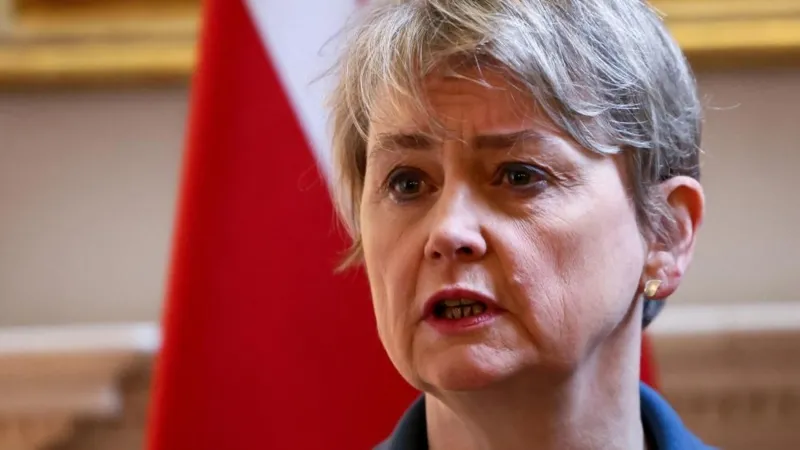
Skip to content Register Sign In Home News Sport Business Technology Health Culture Arts Travel Earth Audio Video Live UK reveals aid priorities after major cuts to budget 3 hours ago Share Save Richard Wheeler Political reporter PA Media Foreign Secretary Yvette Coop
pasted
10:42 PM
UK Reveals Aid Priorities After Major Cuts to Budget
Britain has set out how it plans to distribute a significantly shrunken overseas aid budget, with Foreign Secretary Yvette Cooper telling MPs that funding will be directed at countries in “greatest crisis and conflict” — while others face cuts so steep that critics are warning of devastating consequences for some of the world’s most vulnerable people.
Cooper confirmed that Ukraine, Palestine, Lebanon and Sudan will have their funding fully protected for the coming year. But Mozambique and Pakistan are among the countries facing the steepest reductions to their direct bilateral grants. Yemen, Somalia and Afghanistan will remain humanitarian priorities but will still see direct grant reductions, with support continuing through multilateral programmes rather than direct funding.
The cuts stem from a decision announced last year to slash roughly £6bn from the overseas aid budget by 2027 to help finance an increase in defence spending — a move that will reduce aid from 0.5% of gross national income to 0.3% by that year, equating to an estimated £9.2bn in total. That figure represents a 31% reduction in overall spending. It is a far cry from Labour’s 2024 general election manifesto, which committed to restoring aid to 0.7% of GNI — the longstanding international benchmark — as soon as fiscal conditions allowed. Within months of taking office, that promise had been reversed.
Cooper framed the new approach as moving from donor to investor, seeking “partnership not paternalism” and using remaining funds to help countries attract private finance rather than simply receive grants. She said support for proven global partnerships — including the vaccine alliance Gavi — would continue, and that priorities would include fragile states, violence against women and girls, and climate change.
The detail on polio funding drew particular attention. Cooper confirmed that direct funding for polio eradication would end, though she insisted the issue would be covered within the Gavi funding envelope.
The response from aid organisations and parliamentarians was scathing. Bond CEO Romilly Greenhill said Africa and the Middle East — home to many of the world’s least-developed countries — would be forced to bear the heaviest burden of the cuts. Adrian Lovett of the ONE Campaign warned that slashing bilateral aid to Africa would leave millions without access to basic healthcare, education and humanitarian support, and risk the return of diseases that have taken decades to suppress.
Labour MP Sarah Champion, who chairs the international development committee, said military officials themselves had told her that development spending was the “best line of prevention and first defence” — and that cutting it would have massive consequences, including pushing more people toward Britain’s shores seeking sanctuary. Her Labour colleague Dr Beccy Cooper said the plans “put Britain and the world at risk,” warning that under-supported health systems in poor countries allow diseases to spread faster and further.
The Liberal Democrats called the approach “strategically illiterate,” with international spokesperson Monica Harding arguing that by pulling back from aid and development, the UK was weakening its own security and creating a vacuum that Russia or China could step into.
The Conservative shadow Foreign Office minister Wendy Morton acknowledged that some reduction in funding might be necessary but warned that genuine reform needed to accompany it — and that very little information had been provided about what that reform would actually look like.
It is worth noting that the UK spent £2.8bn — around 20% of its entire aid budget — on supporting refugees within its own borders in 2024, a figure that reflects how the definition of overseas aid has stretched in practice.
