

Chad’s president has put his military on high alert and warned of retaliation after a drone strike killed at least 17 people attending a funeral in a border town an attack he described as a direct assault on his country’s territorial integrity.
President Idris Mahamat Déby, appearing in military uniform, convened an emergency security meeting on Wednesday evening following the strike on Tiné, a town on the Chadian side of the border with Sudan. He ordered the armed forces to be ready to pursue Chad’s rights inside Sudanese territory if necessary, and announced a total closure of the border — a step he said was warranted even after previous warnings had gone unheeded.
Residents said the victims had gathered at a private home for a Koranic reading as part of a funeral ceremony. The attack drew swift condemnation from Chad’s National Assembly and members of the ruling party. The government spokesman said Chad had now “strengthened the posture of its defence and security forces” and was prepared to act in response to any future attacks, while stressing it would do so in compliance with international law.
Responsibility for the strike is contested. Sudan’s paramilitary Rapid Support Forces, which controls most of the western Darfur region directly bordering Chad, is widely suspected of carrying out the attack but has denied any involvement, instead blaming Sudan’s army. The Sudanese military, in turn, has pointed the finger back at the RSF.
The accusation and counter-accusation plays out against a backdrop of deep mutual suspicion. The Sudanese government has repeatedly accused Chad of supplying the RSF with weapons and fighters — allegations N’Djamena flatly denies.
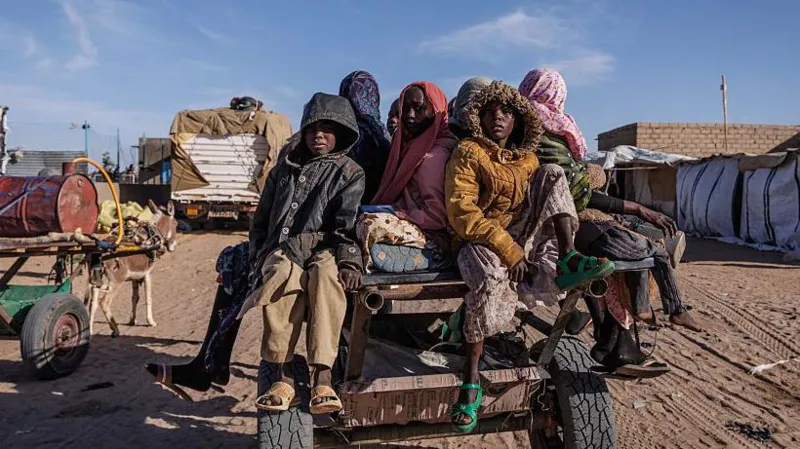
Sudan has been locked in a devastating civil war since April 2023, when a power struggle between the national army and the RSF collapsed into open conflict. The UN estimates hundreds of thousands of people have been killed and more than 13 million displaced, with nearly one million of them now in Chad. The two countries share a 1,400km border that is notoriously porous and difficult to police.
Chad had already closed that border last month after repeated incursions by Sudanese armed groups, allowing only limited humanitarian exceptions. Wednesday’s attack — striking a civilian funeral gathering despite that closure — has now pushed the situation to a new and more dangerous threshold, with fears growing that Chad’s threatened retaliation could draw it directly into a conflict that has already consumed its neighbour.
