

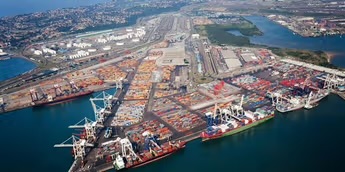
Transnet SOC Ltd., South Africa’s state-owned port and logistics company, has signed a major concession agreement with a company led by Filipino billionaire Enrique Razon. Together, they will develop Durban’s main container terminal, the busiest in Africa. This marks South Africa’s first port privatization project and highlights efforts to boost efficiency and modernize the country’s port sector.
Under the agreement, Razon’s company will invest about 11 billion rand ($647 million) to upgrade infrastructure, improve operations, and bring new technology to Pier 2. This terminal handles about 70% of Durban’s container traffic and over 40% of South Africa’s total container volume.
Transnet CEO Michelle Phillips said this partnership aims to make Transnet one of the world’s top ports. She emphasized that working with the private sector should help improve efficiency, speed up turnaround times, and deliver clear benefits for importers and exporters.
Pier 2 in Durban is a key hub for South Africa’s maritime trade, but ongoing inefficiencies have slowed growth. The World Bank has ranked the country’s ports among the least efficient globally, raising logistics costs and causing delays. Experts believe involving the private sector will speed up modernization and help adopt international best practices that state-run operations have struggled to achieve.
This step follows a similar agreement two years ago, when Transnet allowed International Container Terminal Services Inc. to buy nearly half of Pier 2 and operate it for 25 years. Such partnerships are part of Transnet’s broader strategy to attract foreign investment, raise operational standards, and strengthen South Africa’s position as a leading trade center in Africa.
Analysts point out that Razon’s investment could bring widespread economic benefits. Upgrading infrastructure and making port operations more efficient should help reduce cargo congestion, shorten shipping turnaround times, and support the country’s overall logistics and trade system.
The deal also shows South Africa’s growing confidence in partnering with international investors on large infrastructure projects, which is important for staying competitive in global trade. If successful, this concession could have a major impact on trade and economic growth in the region, as Durban is the main hub for container traffic in Southern Africa.
