

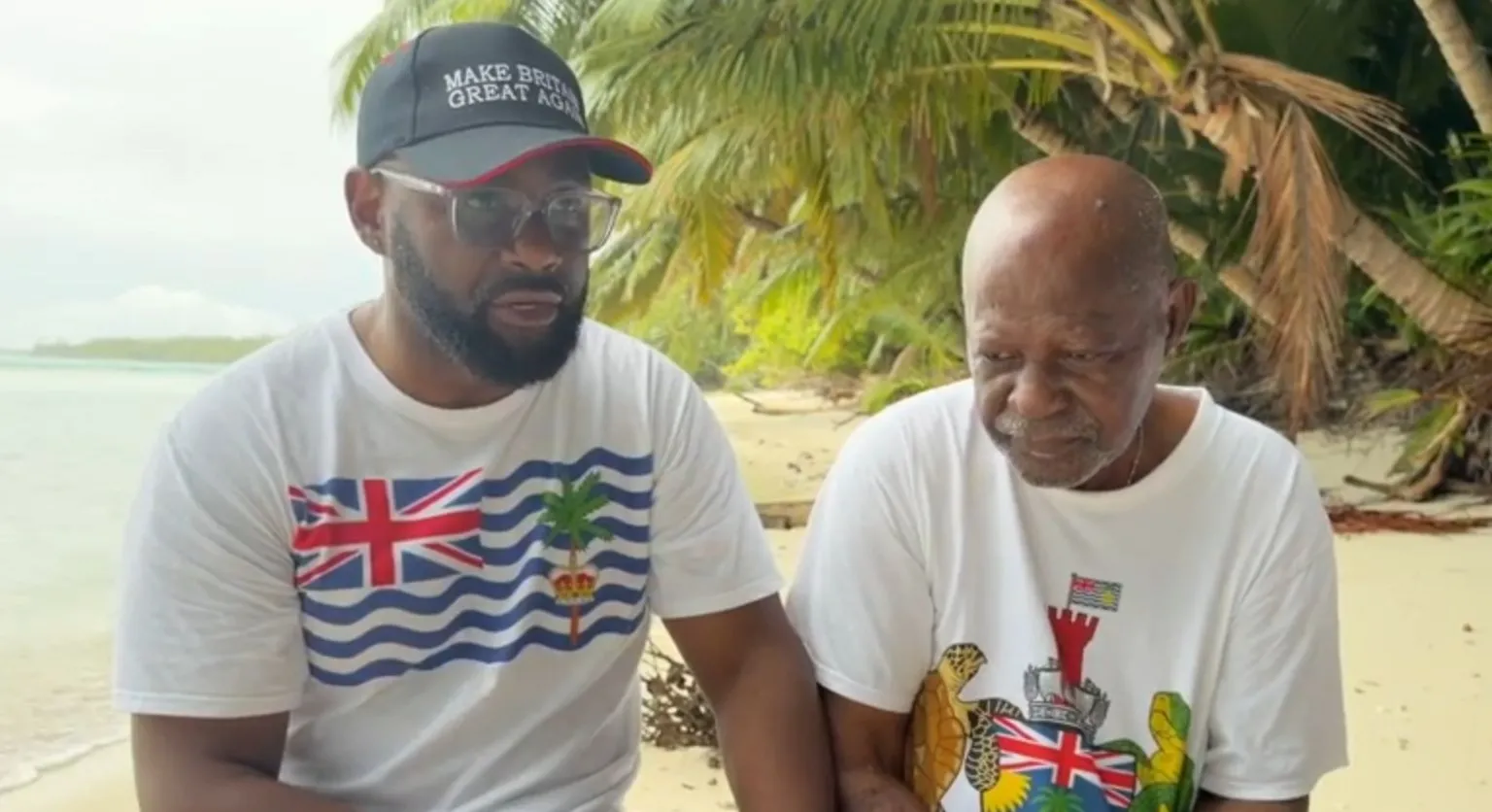
A judge has temporarily stopped the deportation of four Chagossian men who travelled to the Chagos Islands to protest against a proposed agreement that would transfer control of the territory from the UK to Mauritius.
The four men arrived on a remote part of the archipelago on Monday after sailing from Sri Lanka. Their intention, according to their lawyers, was to re-establish a permanent presence on what they describe as their ancestral homeland.
Soon after their arrival, British authorities issued the men with eviction notices, warning that failure to leave could result in fines or imprisonment. However, legal representatives acting on their behalf successfully applied for an injunction, preventing their removal for at least seven days.
The Foreign, Commonwealth & Development Office (FCDO) maintains that the men should comply with the notices served on them. Despite this, the judge ruled that there were serious questions over whether there had been unreasonable delays or failures in granting permits for the men to visit the territory, as well as concerns about the legality of the removal orders themselves.
In his ruling, James Lewis, the chief justice of the British Indian Ocean Territory (BIOT), said the balance of convenience lay firmly with the claimants. He noted that the men were located about 120 miles (193km) from Diego Garcia and, based on the evidence before him, posed no threat to national security. He added that deporting them would make it extremely difficult for them to return.
The judge gave British administrators seven days to respond to the ruling. Lawyers supporting the Chagossians said they were ready to return to court if the deportation orders were not withdrawn.
An FCDO spokesperson reiterated that entering the outer islands of the Chagos Archipelago without a valid permit is both illegal and unsafe. The spokesperson added that the UK government recognises the importance of the islands to the Chagossian community and is working with Mauritius to restart heritage visits to the territory. They said that travelling illegally was not the appropriate way to pursue those aims, while also confirming that the vessel used by the men did not pose a security risk to Diego Garcia.
One of the men, Misley Mandarin, said he had travelled peacefully and respectfully, without posing any threat, simply to stand on his homeland again. He said he and the others remained committed to pursuing their rights lawfully, with dignity and determination. Previously, he told the BBC that the British authorities would have to “drag me from my beach” and even “kill me” if they wanted him to leave.
Mandarin and the other three men are being supported by the Great British PAC, a right-wing political organisation that opposes the UK government’s deal with Mauritius. The group has organised donations to fund the journey and the legal challenge.
One of Mandarin’s lawyers, James Tumbridge, said requests for permits had been ignored by both the BIOT administration and the FCDO. He added that the judge had been willing to hear an urgent application, even while travelling, and that the injunction provided an opportunity to properly assess whether deportation was appropriate in this case.
The ruling adds further complications to the UK government’s efforts to hand control of the islands to Mauritius. Britain has administered the Chagos Islands since 1814 and forcibly removed their inhabitants in the 1960s to make way for a military base on Diego Garcia. The territory was formally established as a British overseas territory in 1965, after the UK paid Mauritius a £3m grant to retain control of the archipelago.
Last year, the UK government agreed to transfer sovereignty of the islands to Mauritius, arguing that recent international court decisions had put the future of the military base at risk. Under the proposed deal, the UK would pay £101m a year for 99 years to retain control of the joint UK-US base.
The agreement has since faced renewed uncertainty after Donald Trump urged Keir Starmer not to “give away Diego Garcia” in a post on his Truth Social platform.
Many people of Chagossian descent, who gained the right to claim British citizenship in 2022, have strongly opposed the deal. They argue that UK sovereignty offers the best chance for them to eventually return and resettle on their homeland. However, Chagossians living in the UK, Mauritius, and the Seychelles do not share a single, unified view, with opinions on the deal remaining deeply divided.
