

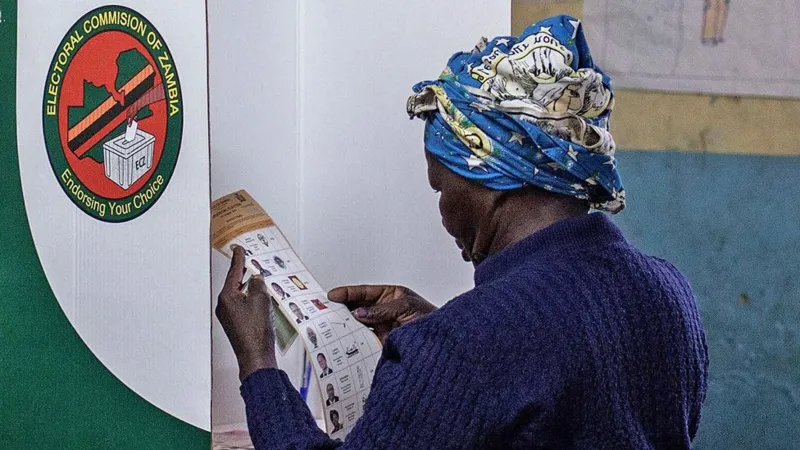
A senior Zambian government official has gone on record to say that political parties are demanding sexual favours from women who want to stand as candidates in August’s general election — and she’s urging victims to start documenting what’s happening to them.
Mainga Kabika, who heads the gender division in the president’s office, made the revelation while addressing a conference of state prosecutors on Monday. She said she had already been receiving messages from women reporting that they were being propositioned in exchange for candidate selection. “I can confirm to you right now that I am actually receiving a lot of messages; some of them are already on record,” she said, calling the situation “unacceptable.” She did not name the parties involved.
The disclosure lands against a backdrop of deep gender inequality in Zambian politics. Only around 15% of the country’s MPs are women — a figure the presidency’s own statement last year attributed to “deep-rooted cultural and structural barriers.” Just 28% of civil service directors are women, and of the 36 CEOs running state-owned enterprises, only five are female.
Beauty Katebe, who chairs the board of the Non-Governmental Gender Organisations Coordinating Council, told the BBC the problem was widespread. She described what women were experiencing as “sextortion” — a pattern she said had been affecting women throughout the nomination process. She acknowledged the difficulty of getting victims to come forward, pointing to the cultural stigma and embarrassment they face, but encouraged those affected to report their cases regardless.
Katebe called for concrete legal reforms — a fast-track court to handle allegations quickly, and tougher laws to deter sexual harassment in political spaces. “If they were being exposed, they would definitely stop,” she said of those responsible. She also argued that entrenched patriarchal attitudes within political parties were at the root of the problem and were actively discouraging women from entering politics as candidates.
Zambia heads to the polls on 13 August, with voters choosing a president, MPs, councillors and council chairs. With the election now only months away and the nomination process already under way, campaigners say the window to act is narrow — and the pressure on authorities to respond is growing.
