

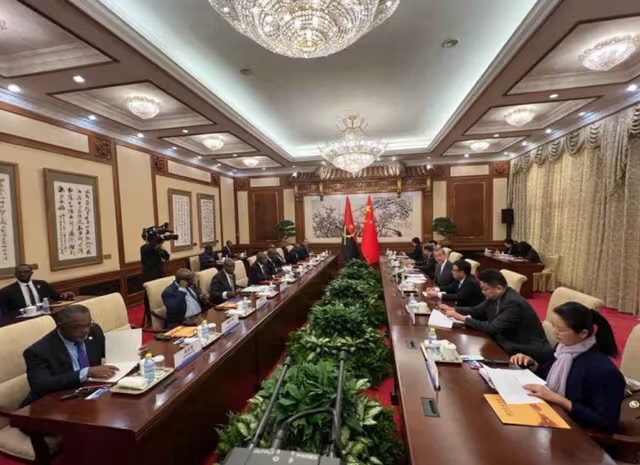
Angola, Africa’s second-largest oil producer, has received 596 investment proposals worth about $21.8 billion over the past five years, with Chinese investors dominating the interest, according to the country’s investment agency.
Data from Private Investment and Export Promotion Agency (AIPEX) shows that Chinese investors accounted for roughly 80% of the total proposals, highlighting the scale of Beijing’s economic influence in Angola. By comparison, companies from Portugal submitted only 72 proposals valued at about $92.6 million.
The strong Chinese presence reflects a broader strategy by China to secure access to energy and mineral resources across Africa. Angola’s large oil reserves and expanding mining sector make it an attractive destination for foreign investors seeking long-term resource security.
To attract more capital, Angola has introduced reforms aimed at making the business environment more competitive. New private investment laws have reduced minimum capital requirements, simplified investment procedures, eased capital repatriation rules, and removed the previous requirement that foreign investors partner with 35% local ownership.
The government has also been pushing economic reforms and privatization. Since 2019, Angola has privatized more than 100 state-owned enterprises, while initiatives such as the Single Window for Investment aim to streamline business processes and increase transparency.
Major infrastructure projects are also improving the country’s economic outlook. One example is the 1,300-kilometer Lobito Corridor railway, which links the Port of Lobito to the border of the Democratic Republic of the Congo, improving access to mineral-rich regions and facilitating regional trade.
Although countries like the United States and Russia are also seeking opportunities in Angola’s energy and mining sectors, China currently holds a strong advantage thanks to state-backed financing, infrastructure expertise, and long-term investment commitments.
Overall, Angola’s efforts to modernize its investment framework and expand infrastructure are attracting increasing global interest, while China’s dominance in proposals highlights the growing role of Asian capital in Africa’s resource-rich economies.
