

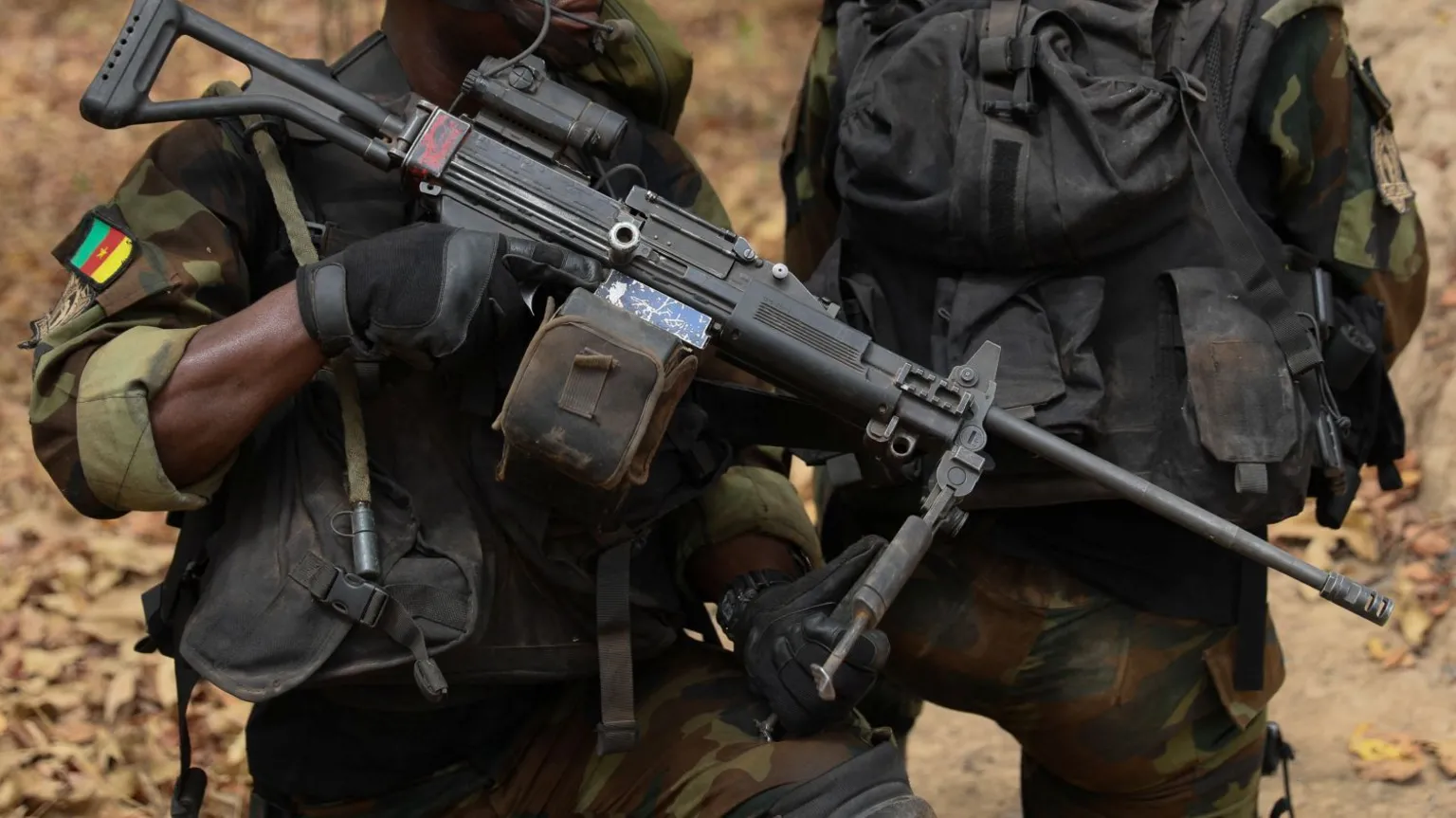
Three Cameroonian soldiers have been sentenced to prison over the killing of at least 21 civilians in the country’s restive English-speaking region, in a decision that stands out in a system where members of the security forces are rarely convicted for crimes against civilians.
The sentences, handed down by a military court, range from five to 10 years in prison for crimes committed six years ago in the Northwest Region. The soldiers were found guilty of murder, arson, and destruction, following a trial that lawyers and human rights groups say was unusual both for reaching a conviction and for acknowledging abuses by the army.
Despite the verdict, lawyers representing the victims told the BBC they were deeply dissatisfied with the punishments, describing the sentences as far too lenient given the scale of the killings.
The case stems from events on 14 February 2020, when soldiers, accompanied by a local militia made up of ethnic Fulanis, carried out a raid on the village of Ngarbuh. During the operation, civilians were killed and homes were destroyed.
According to Human Rights Watch, at least 21 people died in the attack, including 13 children. The group said homes were set on fire and residents were beaten as soldiers and militia members swept through the village.
Initially, Cameroonian authorities denied any responsibility for the killings. That position later changed following sustained international pressure and the conclusions of an official investigation ordered by Paul Biya. The acknowledgement marked a rare moment in the country’s long-running conflict, which has engulfed its Anglophone regions for nearly a decade.
Alongside the three soldiers sentenced on Thursday, a member of the local militia was also convicted and given a prison term for murder, arson, and destruction.
One of the victims’ lawyers, Sother Menkem, criticised the outcome, calling the sentences “mild” and even “friendly” given the circumstances. He noted that under Cameroonian law, serious crimes such as murder and arson carry a minimum sentence of 10 years.
“I expected at least 30 years’ imprisonment or more,” he said, arguing that the attack had instilled deep fear among residents of the area.
Lawyers representing the soldiers maintained that their clients were simply carrying out their duties at the time of the raid.
For survivors, the ruling has brought little sense of closure. One man who lost several relatives in the Ngarbuh attack told the BBC that he needed time to absorb the court’s decision. For safety reasons, he has since left the conflict-affected region.
The military court also rejected demands for compensation from the victims’ families, a decision condemned by another lawyer, Richard Tamfu, who described it as another blow to those affected by the violence.
Human Rights Watch and the victims’ legal team have further criticised the trial for failing to address command responsibility. They argue that the soldiers were acting on orders from higher up the military hierarchy, yet no senior officers were charged or prosecuted.
The proceedings themselves stretched over six years, with hearings postponed multiple times before the final verdict was delivered.
The killings took place against the backdrop of Cameroon’s Anglophone crisis, which began in 2017 when separatist fighters in the country’s two English-speaking regions launched a campaign for an independent state. Human rights organisations have accused both separatist groups and government forces of widespread abuses during the conflict.
According to the United Nations, the violence has left at least 6,000 people dead and forced more than half a million others to flee their homes, making it one of the most serious and protracted crises in Central Africa.
