

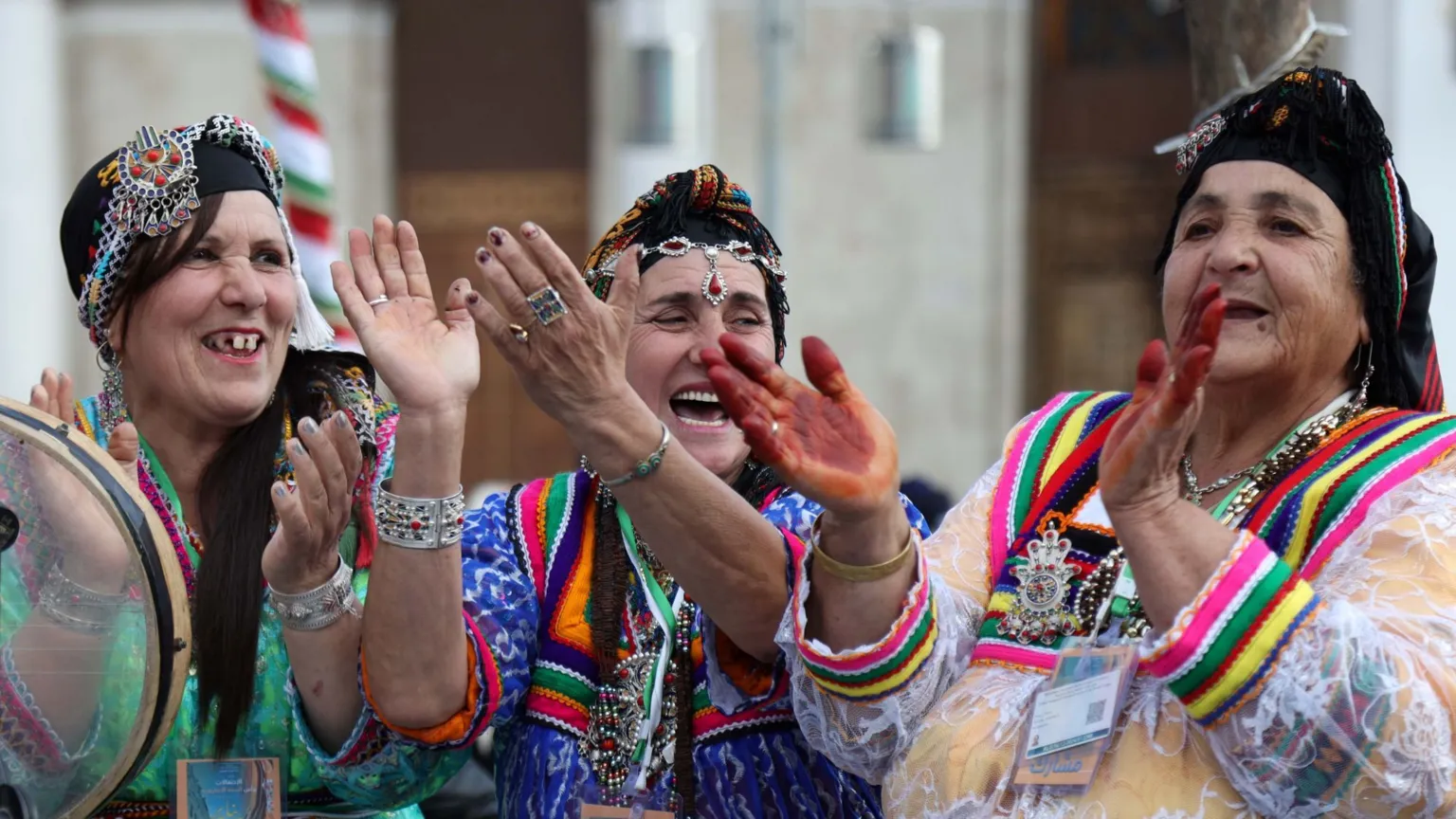
Across North Africa, the Amazigh people have been celebrating the start of the year 2976.
No, they haven’t discovered time travel. The number comes from their traditional calendar, which begins in 950 BC, the year King Sheshonq ascended the throne of Egypt.
The Amazigh new year, called Yennayer, falls between 12 and 14 January, depending on the region in Algeria, Morocco, Tunisia, and Libya. Over the past few days, families have marked the occasion with lavish feasts, bonfires, and traditional music. Calls of “aseggas ameggaz”—meaning happy new year—echo through villages and bustling city streets, while people wear colorful, intricately embroidered traditional clothing.
The Amazigh, whose name means “free people” or “noble people,” are North Africa’s original inhabitants, with roots stretching back to the earliest recorded history. Estimates suggest tens of millions of Amazigh live across the region, with the largest populations in Algeria and Morocco—where about 40% of Moroccans are Amazigh.
Yennayer focuses on family, renewal, and a connection to nature. Food traditions vary by region: in Morocco’s High Atlas, families enjoy “ourkemen”, a hearty mix of legumes, grains, and spices. In Algeria, many serve “trèze”, a combination of sweets, nuts, and dried fruits, sometimes sprinkled over the youngest child as a symbol of prosperity.
Beyond the home, Yennayer celebrations have grown into community events, including parades, concerts, and carnivals, proudly showcasing Amazigh heritage—an especially meaningful gesture given the community’s long history of marginalisation.
After Arab conquest in the 7th century, Arab language and Islam were widely adopted across North Africa, often at the expense of Amazigh languages and culture. During Colonel Muammar Gaddafi’s rule in Libya, for example, Tamazight was banned in schools, and parents were prohibited from giving their children Amazigh names.
Thanks to decades of activism, Amazigh culture and language have gained recognition in recent years. In 2011, Morocco made Tamazight an official language, and both Algeria and Morocco have declared Yennayer a public holiday—in 2017 and 2023, respectively.
Today, Yennayer is not just a celebration of the new year but also a tribute to the resilience of the Amazigh people, marking centuries of cultural survival and pride—now officially in the year 2976.
