

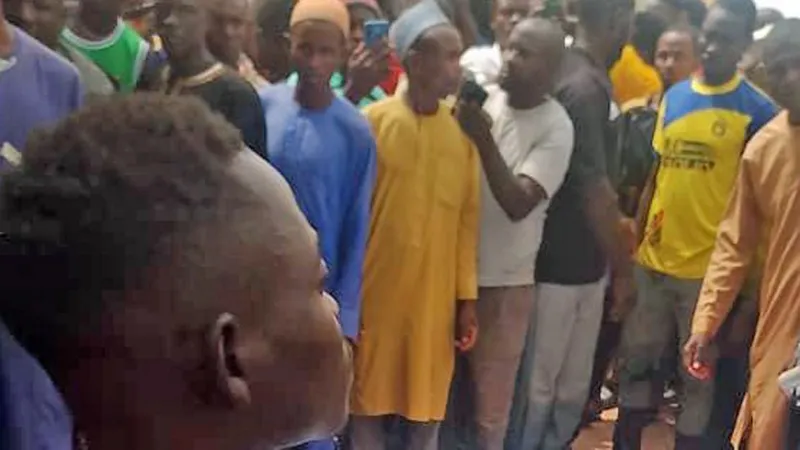
At least 33 miners have died following a suspected carbon-monoxide leak at a lead and zinc mine in central Nigeria’s Plateau State, witnesses have told the BBC.
The incident is believed to have occurred just before sunrise at a mining site outside the town of Wase, operated by Solid Unity Nigeria Ltd.
According to witnesses, toxic gas built up underground in poorly ventilated tunnels, causing workers to collapse shortly before the end of their night shift. The miners were discovered by colleagues reporting for duty in the morning.
More than 20 other miners were rescued and taken to hospital for treatment.
Security personnel have since sealed off the mine, which is located about 200km (124 miles) south-east of the Plateau state capital, Jos, as investigations begin to determine the exact cause of the leak.
State officials have yet to visit the area, and response efforts have reportedly been slow due to security concerns. Armed criminal gangs, known locally as bandits, have been active in the region in recent years.
Conflicting accounts on death toll
Safiyanu Haruna, one of the miners who discovered the bodies at the start of his shift, told the BBC that some workers who were underground at the time survived and were taken to a hospital in Wase for treatment.
“There was no rescue for them at the time because those who were coming for the morning shift had yet to arrive,” Haruna said.
According to Haruna, the incident happened at around 06:30 local time (05:30 GMT), and he believes 37 miners were killed.
He said the miners had just finished performing their early morning Muslim prayers and had returned underground to complete their shift when the gas leak occurred.
The Plateau state government issued a statement saying that its preliminary investigation indicated that 33 miners died in a blast at the mine. However, workers at the scene disputed this account.
“It was carbon-monoxide gas that leaked and killed them,” Haruna said.
“There was no rescue for them at the time because those who were coming for the morning shift had yet to arrive,” he added.
“It is sad to lose 37 miners who were struggling to make ends meet. We’re disturbed by the incident.”
Burials and community impact
Another local resident told the BBC that the victims — believed to be men aged between 20 and 40 — were buried shortly after the incident in line with local traditions.
Large crowds gathered for funeral prayers and burials, reflecting the deep impact of the tragedy on the predominantly Muslim community in the area.
A pattern of mining tragedies
Mining-related disasters occur relatively frequently in Nigeria.
Less than two years ago, dozens of gold miners were killed in neighbouring Niger State after being trapped underground when a pit collapsed. Officials at the time said torrential rainfall had weakened the soil, leading to the collapse.
This latest incident is expected to renew concerns about safety standards and regulatory oversight within Nigeria’s mining sector.
