

An uneasy calm hangs over the rolling green countryside of South Africa’s KwaZulu-Natal province. From a distance, the landscape appears peaceful, but beneath it lies growing fear as farmers confront a fast-moving foot-and-mouth disease outbreak that has now reached almost every corner of the country.
Over the past year, the highly infectious virus has spread through eight of South Africa’s nine provinces, cutting through livestock populations and forcing the slaughter of large numbers of animals in an effort to contain it. For many farmers, the consequences have been devastating, and there is rising concern that international bans on South African animal products could wipe out livelihoods entirely.
Foot-and-mouth disease spreads easily through direct contact between animals, as well as via contaminated feed or water. It causes painful blisters in the mouth and around the hooves of animals such as cattle, goats, and sheep. Infected animals often struggle to walk and feed, leading to reduced productivity. While the disease can kill young animals, it does not pose a risk to humans.
The scale of the outbreak has prompted the government to declare a national disaster. Although agriculture accounts for a relatively small share of the economy, it plays a critical role in rural employment and generates foreign currency through meat and livestock exports in normal times.
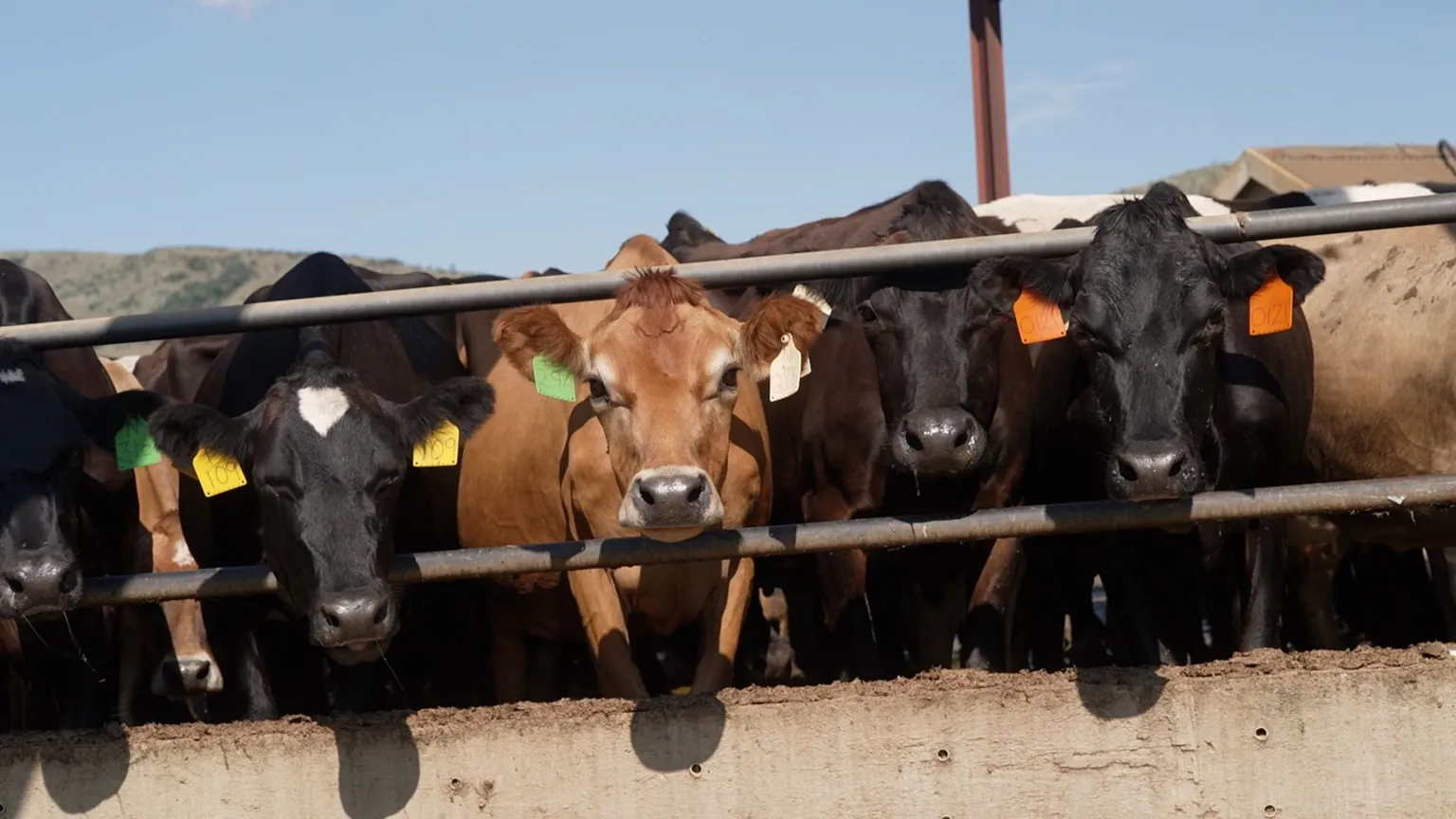
KwaZulu-Natal sits at the centre of South Africa’s dairy industry. Cows graze across farms scattered along the lush hills beside the Mooi River, an area now heavily affected by the disease. Despite the introduction of biosecurity measures — including disinfection points at farm entrances, roadblocks, and restrictions on cattle movement — the virus has continued to spread.
At one large commercial dairy farm, owned by Carol Houston and her husband, the outbreak hit last month. Houston recalls receiving a call from her staff reporting that dozens of cows were showing symptoms, including mastitis and severe lameness.
“They were hobbling and clearly in pain,” she says. “We spent about $380 per cow on treatment, including antibiotics, and did everything we could to keep the disease out.”
The impact was immediate. Daily milk production dropped sharply from 14,000 litres to just 9,000 litres within days, as infected cows ate less and struggled to produce milk. Output remained at that reduced level for roughly two weeks while the infection ran its course through the herd of 2,200 cattle.
Now, every animal is closely monitored. As cows line up in the milking parlour, workers examine each one for symptoms. In the heat of the afternoon, amid the sound of snorting and lowing cattle, teats are cleaned before milking machines are attached. The machines draw milk into large storage containers, while vigilance remains high.
Houston, who has farmed for 35 years, places much of the blame on the government’s handling of the outbreak — a view echoed by many others in the region. Peter Griffin, a nearby dairy farmer with more than four decades of experience, describes the situation as a disaster that never should have happened.
“This catastrophe was avoidable,” he says. “We should never have reached this point. The state has failed us.”
Foot-and-mouth disease is officially classified in South Africa as a “controlled animal disease,” meaning the government is responsible for leading the response. Agriculture Minister John Steenhuisen has come under heavy criticism, but last month he announced a long-term plan to eliminate the disease within a decade.
In the immediate term, the strategy involves mass vaccination campaigns in the hardest-hit regions, followed by wider coverage of the national herd, which is estimated at around 14 million animals.
However, many farmers remain unconvinced that vaccines will arrive quickly enough. Houston says promises have repeatedly gone unfulfilled.
“We were told the vaccine would come in January. It didn’t. Then February. Still nothing. The deadlines just keep getting pushed back. It’s incredibly frustrating.”
Delays pose an even greater threat to small-scale farmers. Nompumelelo Ndlovu, who owns about 20 cattle and earns her living by trading livestock, fears total ruin if vaccinations do not happen soon.
“My biggest fear is that if the vaccine doesn’t arrive in time, all my cattle will be infected,” she says. “That would be the end of my business.”
President Cyril Ramaphosa’s declaration of a national disaster has unlocked emergency funding and accelerated efforts to source vaccines from overseas. South Africa currently lacks the capacity to manufacture foot-and-mouth vaccines at scale, following decades of underinvestment and a loss of technical expertise.
According to Steenhuisen’s Democratic Alliance party, domestic vaccine production collapsed more than 20 years ago. While the agriculture minister has announced plans to revive local manufacturing, it will take time before enough doses can be produced to protect the country’s livestock.
In the meantime, one million vaccine doses are expected to arrive from Argentina this weekend. Even so, they must still be distributed — and they fall far short of what is needed nationwide.
“We’re hoping the government gets this right and vaccinates the entire herd quickly,” says Ntuthuko Shezi, head of investment firm Livestock Wealth. “If we could manage Covid-19 at scale, surely we can do the same with this outbreak.”
