

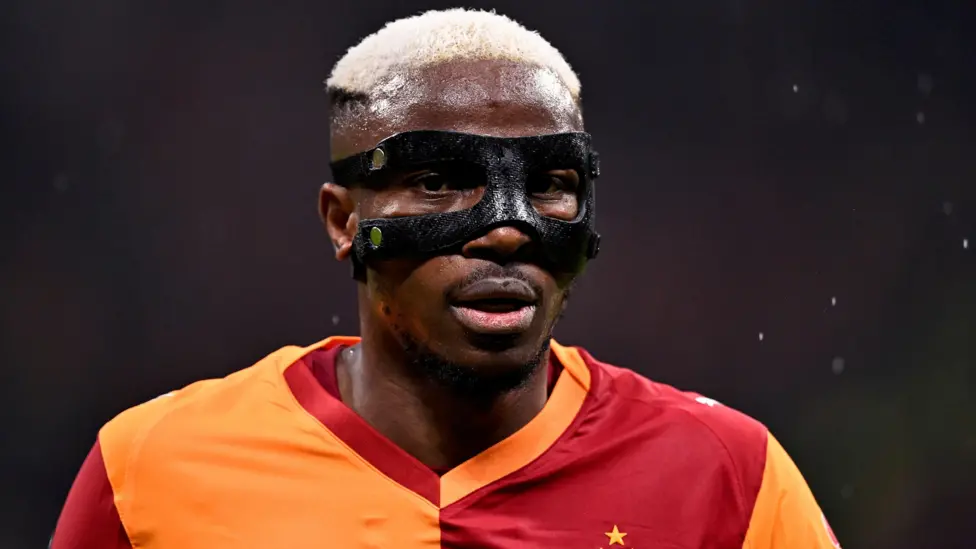
Manchester United decided against pursuing a move for Victor Osimhen largely because of concerns around the Africa Cup of Nations, according to the club’s former first-team coach Benni McCarthy.
Osimhen, Nigeria’s prolific striker, emerged as one of Europe’s most sought-after forwards after netting 26 league goals during the 2022-23 campaign, playing a central role in Napoli winning their first Serie A title in 33 years. His performances placed him firmly on the radar of several elite clubs across the continent.
McCarthy, who was part of the coaching staff at Manchester United under then-manager Erik ten Hag, said he was involved in discussions around striker recruitment and believed Osimhen would have been an ideal fit at Old Trafford.
However, the timing of Afcon — which is typically held midway through the European season — ultimately proved decisive. Despite Osimhen initially being “at the top of the list”, United opted to pursue alternative targets.
“If you spend £100m on a player, you don’t want to lose him for Afcon,” McCarthy told Newsday on the BBC World Service.
“I think he would have been very successful there, but Afcon was a big stumbling block.
“You lose him for so many important matches and the team suffers without its main striker. So that decision was made. A big part of it was because of Afcon, and Victor Osimhen’s name was literally scratched off.”
United instead signed Danish forward Rasmus Højlund from Atalanta in August 2023 for £72m. Højlund went on to score 26 goals in 95 appearances before joining Napoli on loan last September.
Osimhen, meanwhile, was crowned African Footballer of the Year in 2023. He later left Napoli to join Galatasaray on loan in September 2024 before completing a permanent move to the Turkish giants last July, following his omission from Premier League transfer plans.
McCarthy said the Nigerian striker would have thrived under Ten Hag and possessed the mentality needed to succeed in the intense environment surrounding United.
“He scores goals, works exceptionally hard, and he’s immune to the noise,” said South Africa’s all-time leading goalscorer.
“Playing for Man United wouldn’t faze him. What he’s gone through in life — where he comes from — he’s seen far worse.
“If he doesn’t score for five games, it won’t affect him. He’ll just keep going because he understands struggle.”
Despite those qualities, Afcon’s January-February scheduling once again proved decisive. McCarthy admitted the situation was personally painful.
“It made me sad because my whole career I fought to represent my country because I’m African,” he said.
Looking ahead, the issue of African players being overlooked by European clubs could ease after the Confederation of African Football announced Afcon would become a quadrennial tournament from 2028.
CAF president Patrice Motsepe said the move was agreed in consultation with FIFA, with the aim of better aligning the international calendar.
McCarthy, now head coach of Kenya national football team — hosts of the 2027 Afcon — believes the competition should have remained biennial but scheduled more carefully.
“I think Caf should work better with Fifa and Europe — with UEFA — so these tournaments don’t jeopardise players’ careers,” said the 48-year-old.
“You either play it during a proper league break or in June-July when the season ends. But then players don’t get rest.
“For me, that’s still the best option, because many clubs don’t want African players simply because you lose them for a month during Afcon.
“It should have stayed every two years — just played at a time that doesn’t clash with club football.”
