

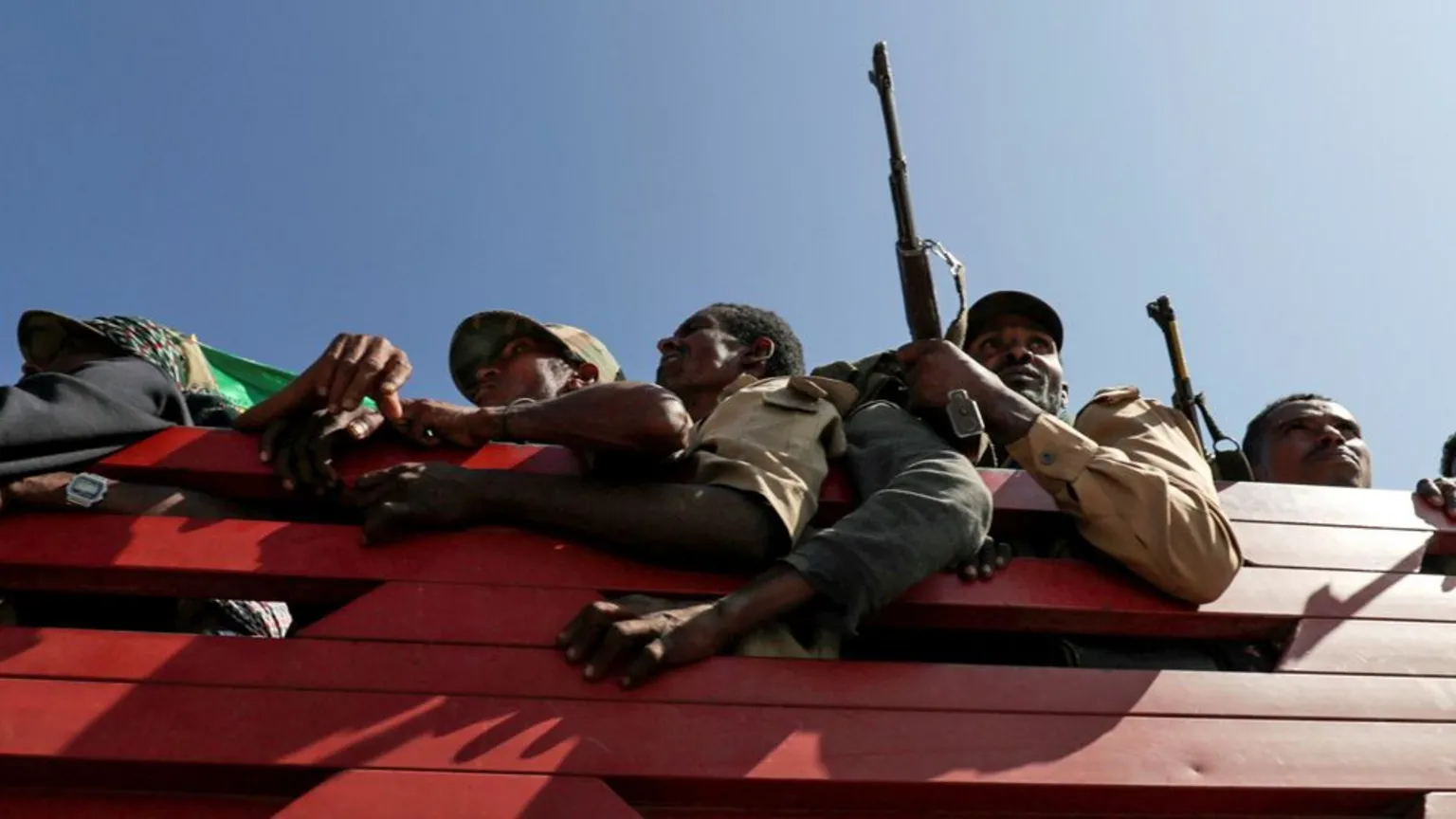
Anxiety is spreading across northern Ethiopia, with growing fears that the war-scarred region of Tigray could once again be on the brink of conflict — barely three years after the guns fell silent.
In the regional capital Mekelle, residents describe a quiet but urgent exodus. Those with the means are boarding flights, while others crowd onto long-distance buses heading south to Addis Ababa.
“People are leaving in whichever way they can,” one resident told the BBC. “If you can afford a plane ticket, you fly. If you can’t, you take a bus.”
Young people are leading the movement, driven by fear rather than opportunity. Shops are being stripped of essentials as families stockpile food, while long queues have formed outside banks. A cash shortage has forced daily withdrawal limits of roughly 2,000 birr ($13; £10) per customer, evoking memories of the darkest days of the previous war.
Those attempting larger transactions increasingly rely on electronic transfers — often paying additional fees — as access to cash dries up.
A peace deal under strain
The unease marks a dramatic reversal from the optimism that followed the November 2022 peace agreement, which ended a brutal civil war between the Ethiopian government and the Tigray People’s Liberation Front (TPLF).
That conflict, which lasted two years, is estimated to have claimed around 600,000 lives, according to an envoy from the African Union (AU), and pushed Tigray to the edge of famine.
The deal, brokered by the AU and signed in Pretoria, was welcomed with relief. Fighting stopped, services such as banking and telecommunications gradually resumed, and signs of normal life returned.
But even at the time of signing, cracks were evident.
Two key actors were notably absent: Eritrea, whose forces had fought alongside Ethiopia’s army, and Amhara, whose militias had also been central to the war effort. Amhara fighters seized large swathes of western Tigray early in the conflict — territory that remains hotly contested.
Since then, Addis Ababa’s relationships with both Eritrea and Amhara militias have deteriorated sharply. At the same time, tensions between the federal government and the TPLF have intensified as national elections scheduled for June approach.
Disputes over the future of contested areas, especially western Tigray, remain unresolved. The resulting mistrust has led many to conclude that the Pretoria agreement is steadily unravelling.
Rising military tensions
Recent developments have heightened those fears. Reports of troop movements in northern Ethiopia have circulated in recent weeks, prompting the United Nations to describe the situation as “highly volatile”.
In late January, brief clashes were reported between federal forces and Tigrayan fighters pushing for the return of areas still controlled by Amhara groups. Drone strikes were recorded, and flights to cities in Tigray were suspended for nearly a week.
The Ethiopian government has accused Eritrea of interfering by backing Tigrayan forces — allegations that Asmara denies. Officials in Addis Ababa say they are alarmed by what they see as growing cooperation between Eritrea and factions within the TPLF.
Last October, Ethiopia’s foreign minister wrote to the UN secretary general alleging that Eritrea was working with “hardliners within the TPLF” to prepare for renewed war.
That warning was echoed more recently by TPLF leader Debretsion Gebremicheal, who said conflict was “looming” and that Tigrayans would be forced to defend themselves to ensure their survival.
The TPLF’s grievances
At the heart of the tension lies territory.
The TPLF is demanding the return of western Tigray, from which an estimated one million people fled during the war. Many remain displaced, living in harsh conditions in temporary camps across the region, unable to go home.
Anger deepened this week after Ethiopia’s election board announced that disputed areas would vote independently in June — outside the jurisdiction of both Tigray and Amhara. Many Tigrayans see the move as a betrayal.
The TPLF is also fighting to regain its legal status. The group was designated a terrorist organisation during the war, and efforts to reinstate it as a political party have stalled. The electoral board has now revoked its licence entirely, preventing it from contesting the upcoming elections.
Internal divisions have further weakened the movement, with breakaway factions forming new parties and complicating negotiations with the federal government.
For decades, the TPLF dominated Ethiopia’s politics. That era ended when Abiy Ahmed became prime minister in 2018 and launched a new ruling party — one the TPLF refused to join.
Supporters of Abiy now accuse remaining TPLF leaders of sabotaging the peace process and aligning themselves with Eritrea, reshaping regional alliances in ways that echo — but do not mirror — those of 2020.
Ethiopia and Eritrea: from peace to rivalry
Relations between Ethiopia and Eritrea have long swung between hostility and cooperation.
Eritrea gained independence in 1993, but the two countries later fought a devastating border war. Abiy was awarded the Nobel Peace Prize in 2019 for ending the two-decade military standoff.
Yet the alliance forged during the Tigray war has since collapsed, replaced by bitter disagreement over access to the Red Sea.
As the world’s most populous landlocked country, Ethiopia lost its coastline when Eritrea became independent. Abiy has described this as an existential issue and has repeatedly called for access to Eritrea’s southern port of Assab, roughly 60km from the border — even suggesting force could be used.
“The Red Sea and Ethiopia cannot remain separated forever,” he told parliament recently.
Amhara’s unresolved conflict
Meanwhile, unrest has been simmering in Amhara since 2023.
Fighters there say their contribution to the war against the TPLF has not been properly recognised, and many want western Tigray formally incorporated into Amhara.
The federal government has accused Eritrea of fuelling the rebellion — claims Asmara rejects. In January, Ethiopian security forces said they intercepted 50,000 rounds of ammunition in Amhara that they alleged had been sent from Eritrea to anti-government militias.
What another war would mean
Tigray is still struggling to recover from the last conflict. Infrastructure remains damaged, the economy is fragile, and unemployment is widespread.
With few opportunities at home, many young people are attempting dangerous migration routes to Europe and the Middle East.
A renewed war — whether between the Ethiopian army and the TPLF, or between Ethiopia and Eritrea — would almost certainly play out in Tigray once again, with devastating consequences.
The fallout could also destabilise the wider Horn of Africa. Ethiopia’s western neighbour Sudan is already gripped by a catastrophic conflict.
“Any war involving Ethiopia, Eritrea, Tigray and domestic actors is very likely to connect to Sudan,” said US-based analyst Michael Woldemariam. “The two conflicts would merge.”
Can conflict be avoided?
International pressure — particularly from the US — was widely seen as decisive in securing the 2022 peace deal. Today, the diplomatic landscape looks far less favourable.
Gulf states have increased their involvement in the region, but their interests are divided. The United Arab Emirates is thought to have close ties with Addis Ababa, while Saudi Arabia is seen as closer to Asmara.
Woldemariam is pessimistic. He argues the AU lacks leverage, Washington is distracted, and Gulf rivals are pulling in opposite directions.
He does note recent mediation efforts by Saudi officials as a positive sign — but questions how effective they can be given Riyadh’s own strategic ambitions in the Red Sea and its rivalry with the UAE.
For now, fear is shaping daily life in Tigray, as residents brace for a future that feels uncomfortably like the past.
