

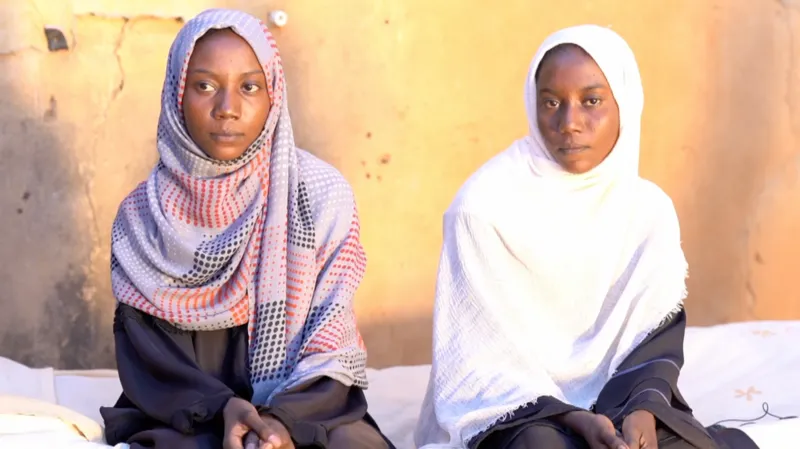
EL-OBEID, Sudan — When shelling hit their school in the Sudanese city of el-Obeid, 18-year-old twins Makarem and Ikram were sitting in different classrooms, unaware their lives were about to change forever.
Makarem was attending an English literature lesson while Ikram was in a science class when they heard what Makarem described as “strange sounds” coming from outside the school. Moments later, shells began to fall.
Makarem said she felt her shoulder “tilt” as shrapnel struck her. Panic spread through the classroom as students dropped to the floor, trying to shield themselves from the blasts.
“We hid by the wall, and the girl standing in front of me put her hand on my shoulder and told me it was bleeding,” Makarem said.
As chaos unfolded, the sisters tried unsuccessfully to find each other. Ikram later searched frantically for Makarem, unaware that she had already been taken to hospital.
With no functioning ambulance service in el-Obeid, wounded students were transported by residents using cars and animal-drawn carts. Teachers and classmates eventually persuaded Ikram to stop searching and return home.
The family only learned Makarem had survived when she returned from hospital later that day.
“I waited outside the front door,” Ikram said. “When I saw her coming, we all cried.”
Makarem was among dozens injured when shells hit the Abu Sitta girls’ school in August 2024. Thirteen students and their English teacher were killed in the attack. The school, which normally serves around 300 students, is located in North Kordofan state.
Regional authorities blamed the paramilitary Rapid Support Forces (RSF), which has been fighting Sudan’s army since April 2023. The RSF has not commented publicly on the incident, and it remains unclear whether the school was deliberately targeted.
Makarem said about half of her friends were killed and the rest injured.
Although she was discharged after initial treatment for shoulder and head wounds, she later developed severe headaches. A CT scan revealed a small fragment of shrapnel lodged in her head, where it remains more than a year later.
“It hurt badly, and I had to take many painkillers,” she said.
Sudan’s civil war has killed more than 150,000 people and displaced millions, according to international estimates. The United Nations describes the situation as the world’s worst humanitarian crisis.
Kordofan, divided into three states, has become a key battleground due to its strategic location between RSF-controlled western regions and areas largely held by the army. Analysts say control of the region determines access to much of Sudan’s oil supply.
The war has devastated education. The UN estimates that around 13 million of Sudan’s 17 million school-age children are currently out of school. In North Darfur, which is under RSF control, only about 3% of schools are functioning, according to Save the Children.
Abu Sitta school was closed for three months following the attack while repairs were carried out. Initially, Makarem and Ikram said they could not imagine returning.
“But when my friends started going back and said it was okay, I decided to return,” Ikram said.
Even so, the trauma lingered.
“I used to close my eyes on the way to class so I wouldn’t see where the shelling happened,” she said.
Some students received psychological support when classes resumed, and beds and nurses were provided so injured students could sit exams.
Despite continued drone attacks on el-Obeid, students were seen laughing and playing in the school courtyard during a visit in December.
School headteacher Iman Ahmed said the students’ determination to continue studying was “a form of defiance and loyalty to those who were lost.”
Conditions remain difficult. El-Obeid was under RSF siege for more than a year until the army regained control in February 2025. Dozens of schools have since been turned into shelters for displaced families.
Nearly one million displaced people are living in the city, according to local officials. In some schools, students are unable to move freely during the day due to overcrowding.
“Even going to the bathroom has become a problem,” said Ibtisam Ali, a student at a school converted into a shelter.
North Kordofan’s education minister Walid Mohamed Al-Hassan acknowledged sanitation and overcrowding problems but said they were “the cost of war.”
Now 19, the twins remain hopeful.
Ikram has completed secondary school and is studying English at university in el-Obeid, inspired by her former teacher who was killed in the attack.
“I remind myself that we must carry the ambition of those who didn’t survive,” she said.
Makarem hopes to become a doctor, inspired by the medics who treated her. Although she passed her exams, her grades were not high enough for medical school.
She said the shrapnel in her head made studying difficult.
“I could only study for an hour, then rest for another hour,” she said.
Neurologist Dr Tarek Zobier said the effects of retained shrapnel vary widely. Some patients experience no symptoms, while others may require surgery if complications arise.
Makarem said the pain now comes and goes, worsening during cold weather. She relies on painkillers and has decided to repeat her school year.
“I believe I can still achieve the score I want,” she said. “I am hopeful for the future.”
