

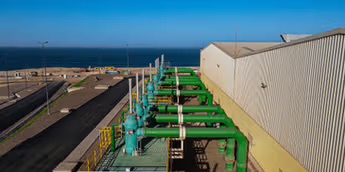
To overcome its worst drought in decades and serve its growing uranium and green hydrogen industries, Namibia is expediting construction of the second desalination plant. The project is timely, as the water shortage continues to pose a threat to people’s lives and industrial activities in the southern African country.
Swakop Uranium, a Chinese state-owned firm and a subsidiary of China General Nuclear Power Group, is collaborating with NamWater, Namibia’s national water utility, to construct the plant in Swakopmund. The plant will support a dependable water supply to the surrounding settlements in the Erongo area, as well as to the Husab uranium mine, the nation’s largest uranium mining project.
The talks have been conducted without complications, according to a joint statement. Swakop Uranium, which owns 70 percent of the project, is about to start construction right away. Major follow-up activities include registering the Erongo Sunam Desalination Project Joint Venture Company, conducting in-depth engineering and environmental analysis, financing, and construction logistics.
The initial proposal for the project dates back to 1998; however, it was reintroduced last year after Namibia experienced the worst drought in over a century. The plant should yield around 20 million cubic meters of water once it is complete, helping the country meet its immediate domestic, industrial, and mining demands.
Namibia is the third-largest uranium producer in the world, accounting for approximately 11 percent of global demand. The uranium sector in the country has been growing at a startling pace, and the government’s green hydrogen targets, which envisage generating 10 to 12 million metric tons of hydrogen each year by 2050, are putting further strain on water resources that are already limited. The desalination plant is therefore considered important in supporting industrial development and the country’s ambitions in energy.
The officials claim that the project will not only stabilize access to water in communities and industrial activities but also increase access to energy in Namibia and its environmental sustainability. Having established a stable water supply, Namibia hopes to protect its mining and hydrogen industries, in addition to addressing climate change and the effects of the current drought.
The Erongo Sunam Desalination Plant is a case of strategic partnership between China and Namibia, where international cooperation is a significant approach to addressing the challenges of infrastructure development and ensuring the necessary resources in Southern Africa.
