

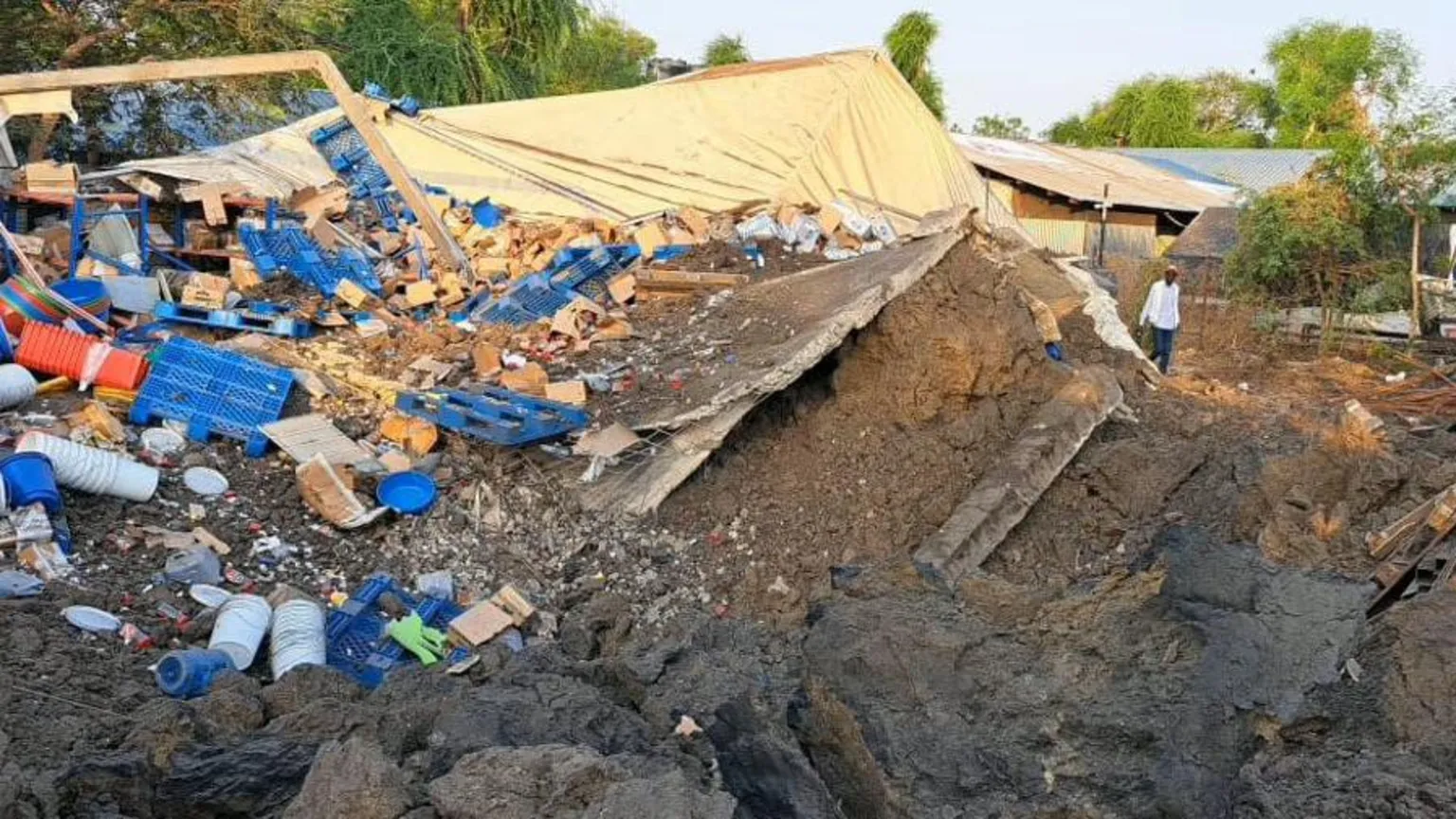
An unknown number of aid workers are missing after airstrikes hit a hospital in South Sudan near the Ethiopian border, according to the medical charity Doctors Without Borders (MSF).
The hospital, located in Jonglei state and run by MSF, was struck overnight on Tuesday in what the organisation said was an aerial attack carried out by South Sudanese government forces. The government has not yet commented on the incident.
On the same day, MSF said another of its health facilities in Pieri, also in Jonglei state, was looted by unidentified attackers, leaving the centre unusable.
“Our colleagues had to flee with the community and their fate and whereabouts are still unknown,” MSF said in a statement.
The attacks come amid renewed fighting in Jonglei between government forces and fighters loyal to First Vice-President Riek Machar, who has been suspended from office after being accused of plotting to overthrow President Salva Kiir. There are growing fears that the violence could escalate into a return to full-scale civil war.
Jonglei is one of South Sudan’s most food-insecure regions, with severe health needs. The United Nations estimates that about 280,000 people have been displaced by fighting and aerial bombardments since December.
MSF said it had received advance warnings of a possible strike on the hospital in Lankien, allowing staff to evacuate the facility and discharge patients hours before the attack.
“One staff member was injured, and the hospital’s main warehouse was destroyed along with medical supplies,” the organisation said, adding that most of its critical medical stock was lost.
Although responsibility for the strike has not been officially confirmed, MSF noted that government forces are the only group in the country with the capacity to carry out aerial attacks.
The charity said it is the sole healthcare provider for around 250,000 people in Lankien and Pieri, warning that the attacks mean local communities could be left without access to medical care.
“While we are aware of the enormous needs in the country, we find it unacceptable to be a target for attacks,” said Gul Badshah, MSF’s operations manager.
MSF reported eight targeted attacks on its facilities in South Sudan last year, forcing the closure of two hospitals in Greater Upper Nile and the suspension of healthcare services in Jonglei, Upper Nile and Central Equatoria states.
In December, the government imposed restrictions on humanitarian access in opposition-held areas of Jonglei, further limiting aid delivery.
South Sudan’s civil war first erupted in 2013, just two years after independence. Although a 2018 peace deal ended the conflict that killed nearly 400,000 people, it has never been fully implemented, and tensions between President Kiir and Riek Machar have continued amid ethnic divisions and recurring violence.
