

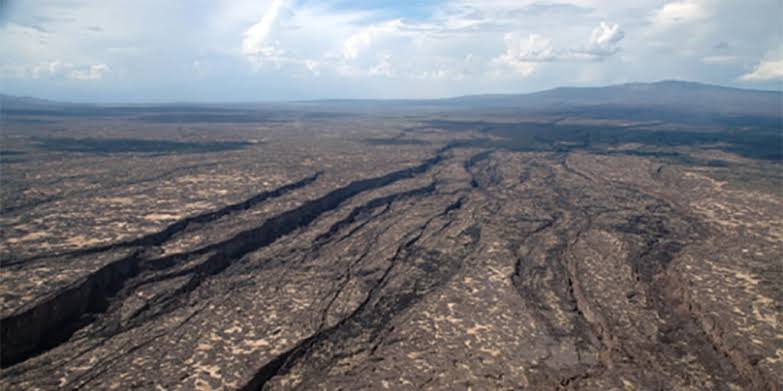
Africa, the second-largest continent in the world, is undergoing a significant and gradual transformation that could shape its future geography for millions of years. The East African Rift, a geological feature running from the Red Sea down to Mozambique, is slowly pulling the continent apart. Over millions of years, this rift is expected to split Africa into two separate landmasses, potentially giving birth to a new ocean.
While this may seem like a distant event, the geological processes are already underway. In this article, we explore the science behind Africa’s slow split, the potential impacts on geography, ecosystems, and society, and what the future holds for the continent.
The East African Rift: A Slow Geological Transformation
The East African Rift is a vast fault system that stretches across eastern Africa. This system extends from the northern Red Sea, through Ethiopia, Kenya, and Tanzania, and toward Mozambique in the south. It is one of the most active rift zones on Earth, where the Earth’s tectonic plates are gradually pulling apart.
The process, known as rifting, is caused by the tension between the plates as they slowly drift apart.
The African continent is made up of two primary tectonic plates: the Nubian Plate, which forms the bulk of the continent, and the Somali Plate, which includes the Horn of Africa. The rift system divides these two plates, and over time, the tension between them causes the land to crack, creating deep valleys and geological features, including volcanoes and fault lines. This ongoing geological activity is slowly pulling East Africa away from the rest of the continent.
What’s Causing the Split?
The Earth’s outer shell, the lithosphere, is divided into several large tectonic plates that float on the semi-fluid mantle beneath. These plates move very slowly—often just a few millimeters each year—but over millions of years, their movement has profound effects on the Earth’s surface.
In East Africa, the Nubian and Somali plates are slowly pulling apart due to tectonic forces beneath the Earth’s crust.
As the plates drift apart, they create fissures, cracks, and deep valleys. The East African Rift is an example of an active continental rift, where the tectonic plates are being stretched, thinned, and pulled apart. This stretching and cracking of the crust is what eventually leads to the formation of a new ocean—a process that could take tens of millions of years.
How Did the Rift Begin?
The East African Rift didn’t form overnight. Geological evidence suggests that the rifting process began around 25 to 30 million years ago. As the tectonic plates in the region started to stretch, the Earth’s crust began to crack.
This long process of rifting was further intensified by volcanic activity, which created the massive volcanoes and deep valleys that characterize the region today, such as the Great Rift Valley.
Over time, volcanic eruptions, earthquakes, and the gradual sinking of land have deepened the rift and caused the land to sink in some areas while rising in others. The East African Rift is not just a single crack; it’s a complex system of fault lines and volcanic activity, which makes the region one of the most geologically active places on Earth.
A New Ocean on the Horizon?
As the rift continues to widen, scientists predict that it will eventually lead to the formation of a new ocean. Seawater from the Red Sea and the Gulf of Aden will eventually flood into the rift, forming a new body of water that will split East Africa from the rest of the continent.
This process is gradual and will take millions of years to complete. However, it will completely reshape the geography of the continent.
The new ocean would likely begin as a narrow sea and gradually expand over time. While this process is happening slowly, it could eventually create two separate landmasses: one that includes much of the African continent and another that includes the islands of the Horn of Africa and the Arabian Peninsula.
How Long Will It Take?
The rifting process is incredibly slow, and it will take tens of millions of years for the rift to fully separate the continent. Experts predict that the rift will become a narrow sea or a series of smaller seas before eventually connecting to larger bodies of water.
Although we may not live to witness this dramatic transformation, scientists are closely monitoring the area to understand the dynamics of plate tectonics and the formation of new oceans.
As the rift deepens and widens, the land along the rift will sink, and eventually, seawater will flow into the fissure. The result could be the birth of a new ocean that divides East Africa from the rest of the continent, creating a completely new coastline and changing the geography of the region.
Potential Impacts on Africa’s Future
The formation of a new ocean in East Africa raises several important questions for the future of the continent. As the geological process unfolds, it will have far-reaching consequences for Africa’s ecosystems, economy, and human society.
When the new ocean finally forms, it will create new coastlines along East Africa. As seawater moves into the rift, it will transform the surrounding ecosystems, possibly creating new marine life while disrupting existing terrestrial habitats.
The creation of new coastlines could also bring new opportunities. East African nations that are currently landlocked, like Ethiopia, could gain access to maritime trade routes, which would boost economic growth and global connectivity.
Changes to Climate and Environment
The creation of a new ocean would significantly alter the climate of East Africa. Oceans have a cooling effect on nearby land, and the formation of a large body of water between East Africa and the rest of the continent could alter weather patterns.
The region might experience changes in rainfall, with some areas becoming wetter and others drier. This shift in climate could impact agriculture, biodiversity, and human livelihoods.
As the land continues to sink and move apart, new lakes, rivers, and valleys will likely form. These environmental changes will take place over millions of years, but they will ultimately reshape the entire region.
Impact on Human Populations
The splitting of Africa will have long-term effects on human populations in East Africa. The formation of new coastlines could lead to population displacement, especially in areas prone to flooding.
The shift in geography could also lead to the development of new trade routes, opening up new opportunities for economic growth and international exchange. However, it will also require significant adaptation in terms of infrastructure, agriculture, and social structures.
The Role of Scientists in Understanding the Rift
Studying the East African Rift is crucial for understanding how continents split and how new oceans form. Scientists use a combination of geological fieldwork, satellite data, and GPS monitoring to track the movement of tectonic plates and analyze the effects of rifting.
These advanced technologies have provided real-time data on the rift’s expansion, helping researchers predict future seismic and volcanic activity in the region.
The slow split of Africa is a fascinating and ongoing geological phenomenon that will continue to unfold over millions of years. While the immediate effects of the rift may not be visible, the long-term impact on Africa’s geography, ecosystems, and economy will be profound.
As scientists continue to study the East African Rift, we gain valuable insights into the Earth’s dynamic nature and the ever-changing forces that shape our planet. While we may never see the new ocean form, the process reminds us that the Earth is constantly evolving, and Africa’s future will look radically different in the distant future.
