

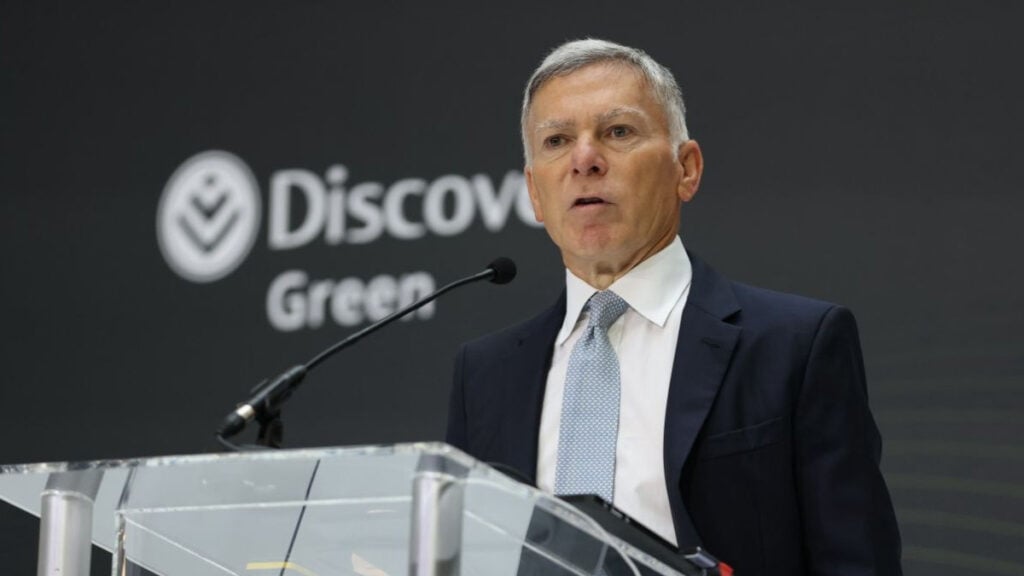
Discovery CEO and founder Adrian Gore says South Africa is on a path that could deliver stronger economic growth, but cautioned that the country must act carefully to avoid undermining recent progress.
Speaking on the sidelines of the World Economic Forum in Davos, Gore said two dominant themes at the gathering were the influence of US President Donald Trump and the rapid adoption of artificial intelligence. He added that South Africa has shown several positive signs in recent months, highlighting improved cooperation between business leaders and the Government of National Unity (GNU).
Late last year, South Africa received its first credit rating upgrade in 20 years from S&P Global, with Moody’s and Fitch expected to follow suit in the near future.
In an increasingly self-interested global environment, Gore said he is highly confident in the framework South Africa has put in place to boost economic growth, restore confidence and create jobs. While GDP growth for 2026 is expected to average about 1.5%, projections suggest it could reach 3.0% by 2030.
A key focus of the government and business strategy is addressing long-standing challenges in electricity supply, logistics, water infrastructure and service delivery.
“Whatever we do must be about economic growth that creates jobs, that creates confidence, and you get a virtuous cycle,” Gore said.
“Confidence creates investment, and you get economic growth. In a world of self-interest, we need to be careful how we play, what we do and not do foolish things.”
Getting out of the lost decade
Economic growth remains critical for South Africa, as the past decade has often been described as a lost one. Annual growth has struggled to exceed 2.0% for most of the last 10 years, apart from the post-Covid rebound in 2021.
Since 2016, the economy has been hit by a series of major shocks, including state capture, the Covid-19 pandemic, unrest in July 2021 and severe flooding in 2022.
With the population growing by between 1.3% and 1.6% annually over the same period, South Africans have become poorer on a per capita basis. Although the International Monetary Fund has raised its growth forecast to 1.3% for 2025 and 1.4% for 2026, these levels remain low compared to other emerging markets.
Reaching growth of 3.0% by 2030 will depend heavily on meaningful structural reforms and improved international relations, according to Aluma Capital chief economist Frederick Mitchell.
Mitchell said the renewal of the African Growth and Opportunity Act (AGOA) is central to South Africa’s economic recovery. The act provides key trade benefits for African exports to the United States and recently received bipartisan support in the US House of Representatives. However, uncertainty remains over South Africa’s inclusion, given strained diplomatic relations and a 30% tariff imposed on South African goods by President Trump.
Mitchell also warned that a slowdown in China — South Africa’s largest trading partner — poses a significant risk to recovery.
“As a nation heavily reliant on trade, particularly with the global shift in commodity prices and demands, any downturn in the Chinese economy will resonate back home, risking another setback in growth rates and investment levels,” he said.
On a more positive note, growth prospects could be supported by further interest rate cuts from the South African Reserve Bank (SARB). A stronger rand, easing inflation expectations and stable oil prices have increased the likelihood of monetary easing.
The Reserve Bank is expected to cut interest rates by around 50 basis points in 2026, with the first reduction potentially coming as early as this week.
