

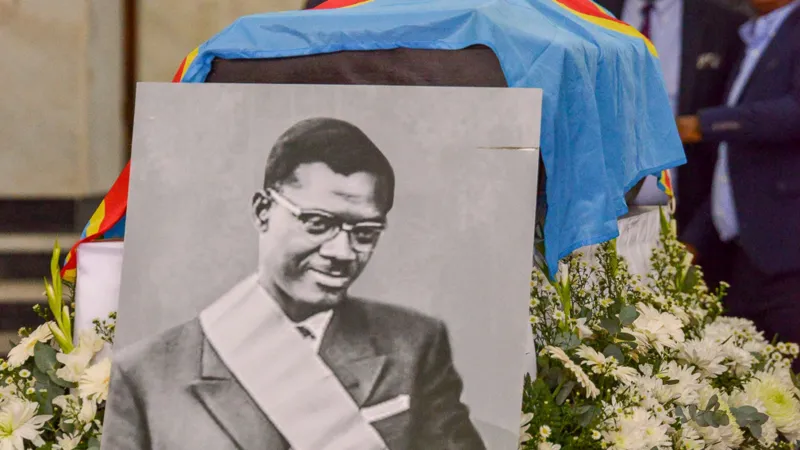
More than six decades after Patrice Lumumba was executed, a Belgian court has ruled that a former diplomat can stand trial in connection with his killing — a decision his family is calling a long-overdue moment of historical reckoning.
Etienne Davignon, now 93, is accused of involvement in the unlawful detention and transfer of Lumumba and of his degrading treatment. He was a trainee diplomat at the time of the killing and went on to become a vice-president of the European Commission. He is the only surviving member of ten Belgians named in a criminal case that Lumumba’s family brought in 2011. The Brussels court ruling is subject to appeal.
Lumumba’s grandson Mehdi didn’t hide his relief. “Belgium is finally confronting its history,” he told AFP.
The story of what happened to Lumumba is one of the most troubling episodes of Africa’s post-colonial era. He was appointed prime minister when Congo gained independence from Belgium in June 1960, quickly becoming one of the most prominent voices in the continent’s anti-colonial movement. In a speech on independence day — delivered in front of Belgian dignitaries including King Baudouin — the 34-year-old directly confronted his former colonial rulers, telling them the Congolese people had been held in “humiliating slavery.”
Belgium, though it had formally handed over power, viewed Lumumba as a threat to its continued economic and political grip on the country. Within months he was ousted in a coup, captured, and in January 1961 — with Belgium’s tacit backing — shot along with two associates. His body was dissolved in acid. Only a single tooth survived, which was laid to rest in Kinshasa in 2022 after being held in Belgium for over sixty years.
Western powers beyond Belgium were also wary of Lumumba, fearing he was sympathetic to the Soviet Union during the Cold War — a suspicion Lumumba himself denied. A 1975 US Senate inquiry found that the CIA had plotted to assassinate him, though that plan was never carried out. It was Belgian-backed Congolese forces who ultimately killed him.
Belgium has since acknowledged its role. The government has formally recognised its responsibility and apologised both to Lumumba’s family and to the Democratic Republic of Congo. But for the family, an apology was never quite enough — they wanted accountability. With Davignon now set to face trial, that process has at least begun, even if it comes more than sixty years too late.
