

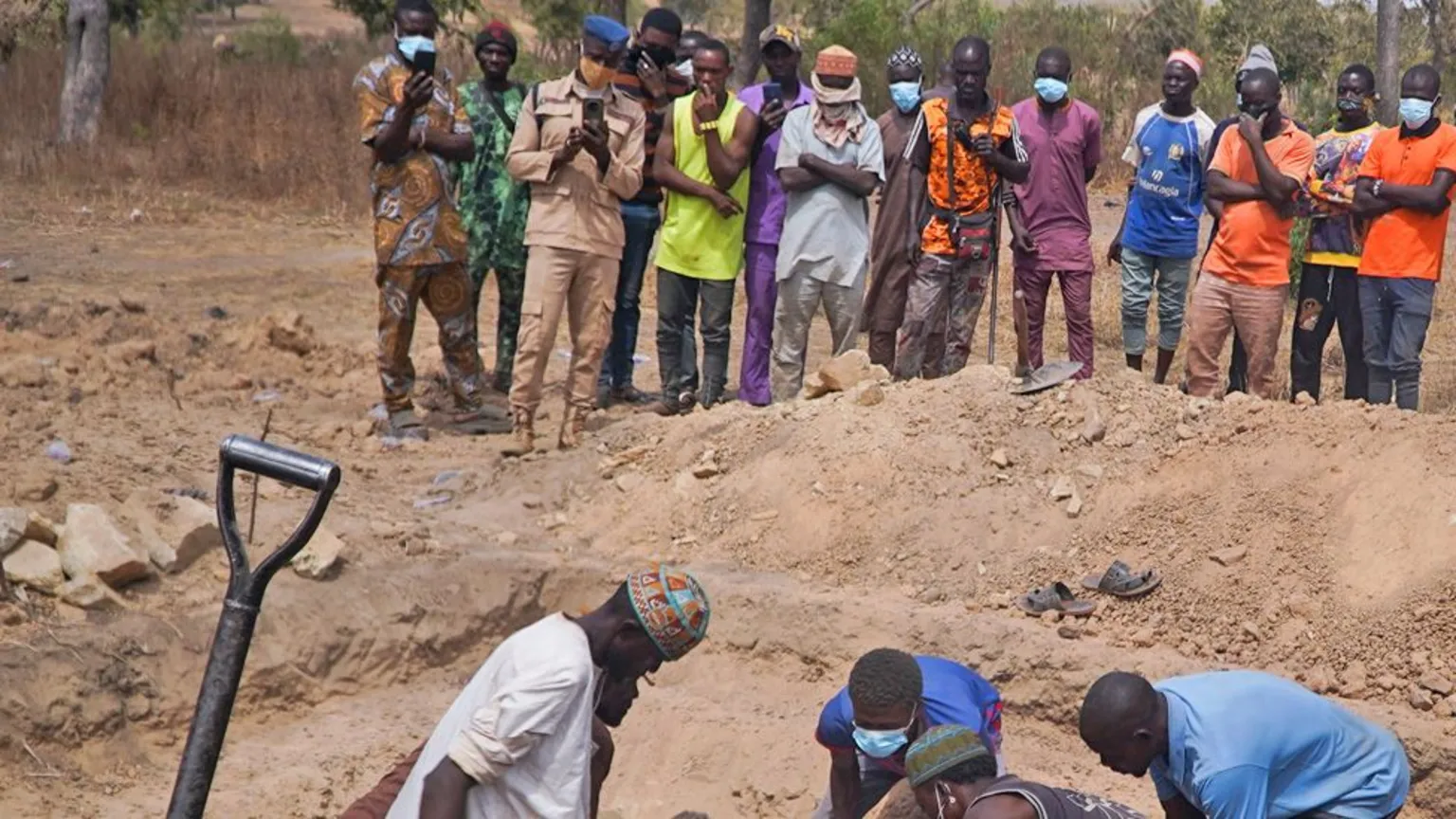
More than 100 armed jihadists, dressed in army fatigues and riding motorcycles, stormed the neighbouring Muslim villages of Woro and Nuku in Nigeria’s western Kwara state in a brutal revenge attack.
“They came en masse in the name of religion, and they decided to kill our people,” said Abdulla Umar Usman, a former teacher and resident of Woro, describing how the violence unfolded. At least 75 people are confirmed dead so far.
The attack began about an hour before sunset on Tuesday, as residents of the farming communities were returning from their fields, where they grow yam, maize and millet.
The militants headed straight to the home of the traditional ruler, Umar Bio Salihu. They had previously written to him requesting permission to come and preach an extremist interpretation of Islam — a request the community rejected.
Salihu was not at home at the time. The attackers set his compound on fire and killed two of his children.
“Two of the community head’s children, who were medical students, were killed in front of the house before they set it ablaze,” Usman said.
From there, the attackers launched a night-long killing spree.
“They massacred everyone. It is just devastating,” said Mohammed Dauda, a local official.
Human rights investigators said many of the victims were found with their hands and feet bound. Some had their throats slit, while others were shot.
By morning, the jihadists had left — taking 38 women and children with them, including the rest of the traditional ruler’s family.
“They killed two of my children and abducted my wife and three children,” Salihu said.
The attackers demanded that residents renounce the Nigerian government and its constitution and instead submit to their rule, effectively trying to impose a parallel system of governance.
“This is against what the Quran teaches,” Salihu said.
During the raid, homes and shops were set on fire across the village.
The Nigerian government has blamed Boko Haram for the attack, though the group has not claimed responsibility. Boko Haram, which gained international attention in 2014 after abducting more than 200 schoolgirls from Chibok, remains active despite splintering into several factions.
One of those factions, known as Mahmuda, has been operating in rural areas of Kwara and neighbouring Niger state.
Human rights groups say the warning signs had been present for months. The militants had reportedly been distributing pamphlets in both villages for around five months, urging residents to accept their extremist ideology.
“These communities have been receiving pamphlets soliciting them to join the militants’ preaching,” said Isa Sanusi, head of Amnesty International in Nigeria. “When they encountered resistance, they began issuing threats.”
This aligns with accounts from residents, who say warnings were issued just days before the attack.
Local lawmaker Saidu Baba Ahmed said the final letter was sent to Salihu, who alerted security forces. Soldiers reportedly visited the area briefly to investigate, but after they withdrew, the attackers struck.
Amnesty International described the incident as a “stunning security failure,” questioning why authorities failed to act despite clear warning signs.
“We are wondering why this security lapse was allowed to happen,” Sanusi said.
