

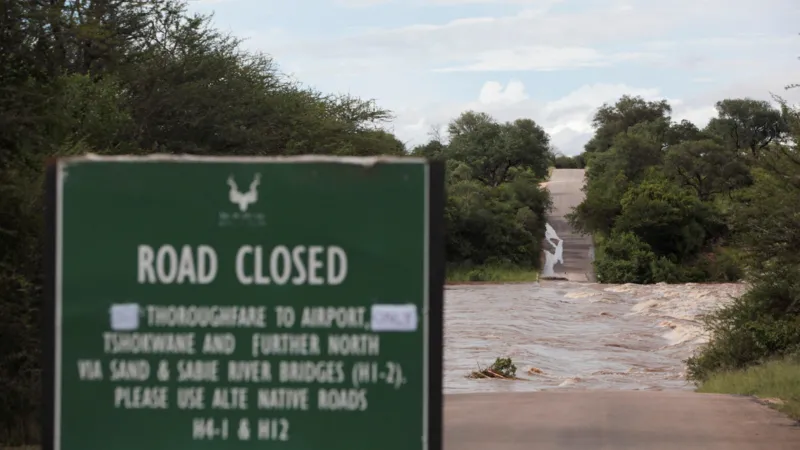
Severe flooding across South Africa’s northern provinces of Limpopo and Mpumalanga has forced the temporary closure of the iconic Kruger National Park, with some visitors and staff evacuated by helicopter as conditions worsened.
The flooding follows weeks of relentless heavy rainfall that has left at least 19 people dead across the country. Thousands of homes have been damaged, with some completely swept away by rising waters.
Among the victims was a five-year-old boy from the town of Giyani in Limpopo. President Cyril Ramaphosa travelled to the area to assess the destruction and personally met with the child’s family to express his condolences.
South Africa’s Weather Service has issued a red level 10 warning, the highest alert, predicting further heavy rainfall in already affected regions. Authorities have urged residents to remain vigilant and limit movement.
“If possible, stay indoors and off the roads,” the weather service warned. “Never attempt to drive through flooded roads. If your vehicle stalls, abandon it immediately and move to higher ground.”
Residents have also been advised to relocate valuables to higher levels, turn off electricity at the main supply, and move livestock away from flood-prone areas.
Park officials say wildlife within national parks is not believed to be at significant risk, as animals instinctively move to higher ground during extreme weather events.
Emergency response efforts have intensified, with helicopters and military units deployed in recent days to rescue stranded residents in the hardest-hit areas.
In Limpopo province, flooding has washed away low-lying bridges, destroyed roads and schools, and left several health clinics inaccessible, according to local officials.
The provincial governor said on Friday that she shared in the “grief and distress” of affected communities and announced that 4 billion rand (approximately $244 million / £182 million) would be allocated to rebuilding essential infrastructure, including electricity and water systems.
Within Kruger National Park itself, staff housing was submerged overnight, prompting emergency evacuations to ensure workers’ safety.
Reuters reports that flooding across south-eastern Africa has become increasingly frequent and severe, with climate change intensifying storms forming over the Indian Ocean and increasing rainfall across the region.
